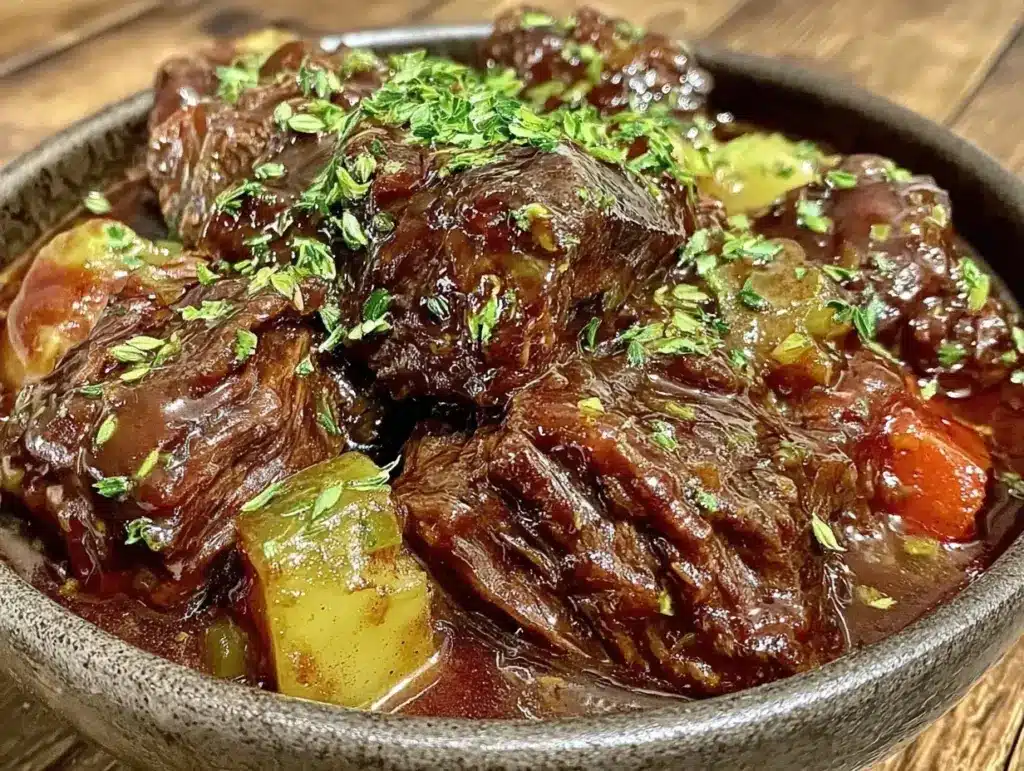
My Nana’s kitchen was never quiet. It smelled like rosemary, browned meat, and the faint, sharp tang of red wine reducing in a heavy Dutch oven. I spent most of my childhood sitting on a wooden stool in that kitchen, swinging my legs, watching her hands move with a rhythm that felt like music. She didn’t use a slow cooker—those things didn’t exist when I was a kid—but she did something slower. She let the stew simmer on the back burner of her gas range for hours, letting the beef surrender to the liquid until it fell apart at the touch of a fork.
When I moved into my first apartment, I missed that smell desperately. I tried to recreate it on my stovetop, but I was busy, impatient, and prone to burning the garlic. The first few attempts were dry, the beef tough, and the sauce thin. I felt like I was failing a test I hadn’t studied for. Then, one particularly gray November evening, I remembered how Nana would just… let it be. I put the ingredients in a slow cooker, turned it to low, and went to bed. I woke up to a house that smelled like comfort. It was the closest thing to her kitchen I had ever made.
That was ten years ago. Since then, I’ve made this slow cooker beef stew with red wine and fresh herbs dozens of times. It has become my anchor when life feels chaotic. It’s not just about the convenience of dropping ingredients in a pot; it’s about the depth of flavor that only comes from time. This recipe isn’t a hack. It’s a memory, translated for modern life. I’ve tweaked it, tested it, and refined it until it tastes exactly like the Sunday dinners of my youth.
What makes this specific version of slow cooker beef stew with red wine and fresh herbs so special? It’s the balance. Too much wine makes it sour; too little makes it flat. Too many herbs make it taste like tea; too few make it boring. I’ve found the sweet spot. The beef gets incredibly tender, the vegetables melt into the sauce, and that deep, rich color? That comes from searing the meat first and letting the wine do its magic. It’s hearty, it’s warming, and it’s the kind of meal that makes you want to cancel your plans and stay in. Let me walk you through exactly how I make this slow cooker beef stew with red wine and fresh herbs, step by step.
Why You’ll Love This Recipe
I know, I know. “Another stew?” But hear me out. This isn’t just another stew. This is the one you make when you need to feel held. Here’s why this version has earned a permanent spot in my weekly rotation, and why I think it will become yours too.
- It’s Flavor-Forward — Most slow cooker recipes taste bland because you skip the sear. I never skip the sear. By browning the beef in batches, you get that Maillard reaction—those deep, savory crusts that add a richness you just can’t get from boiling. The red wine adds tannins that cut through the fat, creating a complex, restaurant-quality sauce.
- Set It and Forget It (Mostly) — Yes, you need to chop and sear, but after that? It’s pure relaxation. I throw everything in, set the timer, and I’m done. It’s perfect for busy weeknights or lazy Sundays. I made this while helping my son with his math homework last week, and the house smelled amazing without me even thinking about it.
- Freezer-Friendly Gold — This slow cooker beef stew with red wine and fresh herbs actually gets better the next day. The flavors meld overnight. I make a double batch on Sundays and freeze portions in glass jars. It’s my emergency dinner for when I’m too tired to cook but too hungry to order takeout.
- Comfort in Every Bite — There’s something deeply satisfying about beef that falls apart. The carrots turn sweet and soft, the potatoes become creamy, and the gravy is thick enough to coat the back of a spoon. It’s not just food; it’s a hug on a plate.
- Flexible and Forgiving — Did you run out of thyme? Use rosemary. Don’t have pearl onions? Skip them. This recipe is forgiving. It’s designed to work with what you have. It’s rustic, honest cooking.
This is my go-to when dinner needs to just work. It’s reliable, it’s delicious, and it connects me to my past.
Key Ingredients for the Best Slow Cooker Beef Stew
Let’s talk about what goes into the pot. I’m not here to sell you expensive cuts you don’t need, but I am here to tell you that ingredient quality matters. Here’s exactly what I use and why.
Beef Chuck Roast (3 lbs / 1.36 kg)
This is non-negotiable. You need chuck. It’s a tough cut with lots of connective tissue and marbling. In a slow cooker, that collagen breaks down into gelatin, making the meat tender and the sauce silky. Lean cuts like sirloin or round will be dry and chewy. Look for a roast with good marbling—white streaks of fat throughout. I usually buy a large one and cut it into 1.5-inch cubes myself. It saves money and ensures uniform cooking.
Red Wine (1.5 cups / 355 ml)
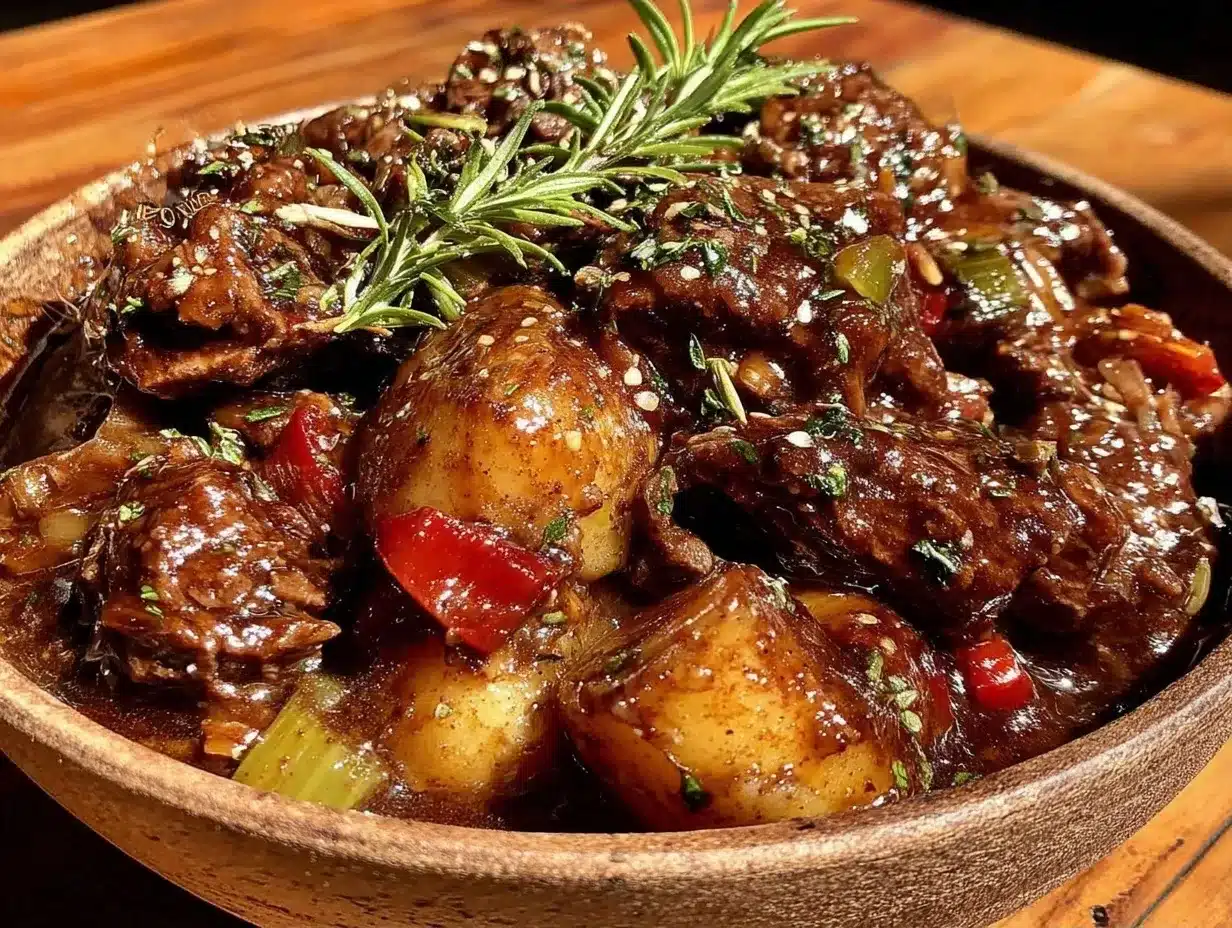
Do not cook with “cooking wine” from the vinegar aisle. It tastes salty and metallic. Use a dry red wine you would actually drink. A Cabernet Sauvignon or a Merlot works beautifully. The alcohol cooks off, leaving behind fruit notes and acidity that balances the richness of the beef. If you don’t drink alcohol, substitute with beef broth plus a tablespoon of balsamic vinegar for that acidic punch.
Beef Broth (2 cups / 480 ml)
I use low-sodium beef broth so I can control the saltiness. High-sodium broth can make the final dish too salty, especially if you add soy sauce or Worcestershire later. Look for a brand with real bone broth or collagen if you can find it—it adds body to the sauce.
All-Purpose Flour (3 tbsp / 24 g)
We toss the beef in flour before searing. This isn’t just for browning; it helps thicken the sauce later. It creates a light crust on the meat and gives the liquid something to cling to. Don’t skip this step. It’s crucial for that velvety texture.
Aromatics: Onion, Garlic, and Carrots
Yellow Onion (1 large, diced) — The base of sweetness. I use yellow onions for their robust flavor. Garlic (4 cloves, minced) — Fresh only. Jarred garlic tastes metallic in long-cooked dishes. Carrots (4 large, chopped into chunks) — They add sweetness and color. I cut them into large chunks so they don’t disintegrate completely.
Herbs: Rosemary, Thyme, and Bay Leaf
Fresh Rosemary (2 sprigs) — Woody and piney. Fresh is better here, but dried works in a pinch (use 1 tsp). Fresh Thyme (4 sprigs) — Earthy and subtle. Dried Bay Leaf (1 leaf) — Adds a background depth. Remove it before serving!
Thickener: Cornstarch Slurry (2 tbsp cornstarch + 2 tbsp cold water)
If your sauce is too thin at the end, this is your fix. It’s a quick way to get that gravy-like consistency without lumps.
Tools Needed
You don’t need fancy equipment. Here’s what I use. I’ve been cooking for years, and I’ve found that simplicity wins.
- 6-Quart Slow Cooker — I use a Crock-Pot brand, but any 6-quart works. Don’t overfill it. Leave some room for steam circulation.
- Large Skillet (Cast Iron or Stainless Steel) — I use a 12-inch cast iron skillet for searing. It holds heat well and gives the beef a great crust. A non-stick pan works too, but you won’t get the same browning.
- Chef’s Knife and Cutting Board — Sharp knife makes chopping safer and faster. I use my Japanese Gyuto.
- Wooden Spoon — For stirring without scratching your slow cooker insert.
- Paper Towels — For patting the beef dry. This is critical for a good sear.
That’s it. No blender, no thermometer, no gadgets. Just good old-fashioned tools.
How to Make Slow Cooker Beef Stew with Red Wine and Fresh Herbs
Let’s get into the kitchen. This process takes about 15 minutes of active work, then you let the slow cooker do the heavy lifting. Here is exactly how I do it.
Step 1: Prep the Beef (5 minutes)
Pat the beef cubes completely dry with paper towels. Moisture is the enemy of browning. If the beef is wet, it will steam instead of sear. Toss the dried beef cubes in a bowl with the flour, salt, and pepper. Coat them evenly. The flour should look like it’s dusting the meat, not clumping.
Step 2: Sear the Beef (10-15 minutes)
Heat 2 tablespoons of oil in your large skillet over medium-high heat. You want the oil to shimmer but not smoke. Add the beef in a single layer. Do not overcrowd the pan! If you crowd it, the temperature drops, and the meat steams. Sear in batches. Let each side get a deep, dark brown crust. This takes about 2-3 minutes per side. It’s tempting to rush, but don’t. That brown color is flavor. Transfer the seared beef to a plate. Wipe out the pan if there are burnt bits, but leave the fond (the brown bits stuck to the bottom)—that’s liquid gold.
Step 3: Sauté Aromatics (3 minutes)
Reduce heat to medium. Add a little more oil if needed. Add the diced onion and cook for 3-4 minutes until soft and translucent. Add the minced garlic and cook for just 30 seconds until fragrant. Be careful not to burn the garlic. Add the carrots and cook for another minute. This builds the flavor base.
Step 4: Deglaze and Combine (2 minutes)
Pour in the red wine. Scrape the bottom of the pan with a wooden spoon to release all those brown bits. Let it simmer for 1 minute to cook off some of the alcohol. Pour this mixture into the slow cooker. Add the seared beef (and any juices on the plate), the beef broth, rosemary, thyme, and bay leaf.
Step 5: The Long Wait (6-8 hours)
Stir everything together gently. Cover and cook on LOW for 6-8 hours. I prefer low because it keeps the beef tender. If you’re short on time, you can use HIGH for 4 hours, but the texture won’t be quite as melt-in-your-mouth perfect. Check at 6 hours. The beef should be fork-tender.
Step 6: Thicken the Sauce (Optional, 5 minutes)
Once the beef is tender, check the sauce. If it’s too thin, make a slurry by mixing the cornstarch and cold water in a small bowl until smooth. Stir it into the stew. Switch the slow cooker to HIGH (or keep on LOW) and let it cook for another 15-20 minutes. The sauce will thicken and become glossy. Taste and adjust salt and pepper. Remove the herb sprigs and bay leaf.
Total time: About 8 hours (mostly inactive). It’s worth every minute.
Expert Tips from a Stew Lover
Here’s everything I learned from making this too many times. These are the game-changers.
Don’t Skip the Sear
I know it’s an extra step. I know you’re tired. But skipping the sear means a bland, gray stew. The Maillard reaction is non-negotiable for depth. I learned this the hard way when I tried to make this recipe one-handed while holding a phone. The result was disappointing. Never again. Take the time to brown the meat.
Pat the Meat Dry
This is the #1 mistake people make. Wet beef = steamed beef. Use paper towels. Be aggressive. Dry it until it looks almost pale.
Use Fresh Herbs, Not Dried
Dried herbs can become bitter and grassy when cooked for 8 hours. Fresh rosemary and thyme hold up better and release their oils gradually. If you must use dried, add them in the last hour of cooking.
Acidity is Key
Stew can taste heavy. A splash of acid at the end—like a teaspoon of balsamic vinegar or lemon juice—brightens the whole dish. I add this right before serving. It wakes up the flavors.
Recipe Variations
Once you’ve nailed the basic version, here’s how to mix it up. This recipe is a canvas.
Winter Root Vegetable Stew
Add parsnips, turnips, and rutabaga along with the carrots. They have a similar texture to potatoes but a more complex, nutty flavor. It adds great variety to the bite.
Green Bean and Mushroom Stew
Add 1 cup of sliced cremini mushrooms with the onions. They add an umami punch. Stir in fresh green beans during the last 30 minutes of cooking for a pop of color and crunch.
Spicy Beef Stew
Add a teaspoon of smoked paprika and a pinch of cayenne pepper when you add the spices. It adds a warm heat that pairs beautifully with the red wine. Serve with crusty bread to soak it up.
Gluten-Free Option
Simply swap the all-purpose flour for cornstarch or a gluten-free flour blend when tossing the beef. For thickening, use the cornstarch slurry as usual. It works perfectly.
Serving & Storage
Serving
I serve this slow cooker beef stew with red wine and fresh herbs over mashed potatoes, egg noodles, or crusty sourdough bread. The gravy is too good to waste. I like to garnish with fresh chopped parsley or chives for a pop of green. It looks elegant and tastes fresh.
Storage
Refrigerator: This stew keeps well in an airtight container for up to 4 days. In fact, it tastes even better on day two as the flavors continue to meld.
Freezer: Yes, this freezes beautifully! Let it cool completely, then transfer to freezer-safe bags or containers. It will keep for up to 3 months. Thaw in the fridge overnight and reheat gently on the stove. Note: If you add potatoes, they may get slightly mealy after freezing, but the flavor is still great.
Reheating: Reheat on the stove over medium-low heat. Add a splash of broth or water if it’s too thick, as it will thicken further in the fridge.
Nutrition Information
I’m not a nutritionist, but here’s the breakdown. This is hearty food. It’s meant to fill you up.
| Nutrient | Per Serving (approx.) |
|---|---|
| Calories | 450 kcal |
| Protein | 35g |
| Carbohydrates | 25g |
| Fiber | 4g |
| Fat | 18g |
| Sodium | 600mg |
My take: This is comfort food with beef and wine. It’s not a diet food. But it’s better than takeout and I know exactly what’s in it. The protein is high, which is great. Just be mindful of the sodium if you’re watching your intake.
Final Thoughts
This slow cooker beef stew with red wine and fresh herbs is more than a recipe. It’s a way to slow down. It’s a way to care for yourself and your family. It’s the taste of my Nana’s kitchen, brought into my own. I hope you make it, and I hope it brings you the same comfort it brings me. If you do, please let me know how it turns out. I love hearing your stories and seeing your photos. Happy cooking!
FAQs
Can I use a different cut of beef?
I strongly recommend chuck roast. It has the right amount of fat and connective tissue. Lean cuts like sirloin will be dry and tough after 8 hours in the slow cooker. If you must use another cut, look for something with marbling.
Can I use white wine instead of red?
You can, but the flavor will be different. White wine is lighter and more acidic. It works well with chicken or pork stews, but for beef, red wine adds a richness and depth that complements the meat better. If you use white wine, add a splash of balsamic vinegar to mimic the depth of red wine.
Do I have to sear the beef?
Technically, no. You can put raw beef in the slow cooker. But the flavor will be significantly blander. The sear adds a savory, caramelized layer that you can’t get otherwise. It’s worth the 15 minutes.
Can I make this in the Instant Pot?
Yes! Sear the beef using the Sauté function, then add everything else. Cook on High Pressure for 35 minutes, then do a natural release. It will take about an hour total, but it will be tender and delicious.
Why is my stew too thin?
Slow cookers trap moisture, so the sauce doesn’t reduce like it does on the stove. Use the cornstarch slurry at the end to thicken it. Or, remove the lid and cook on High for the last 30 minutes to let excess liquid evaporate.
Pin This Recipe!
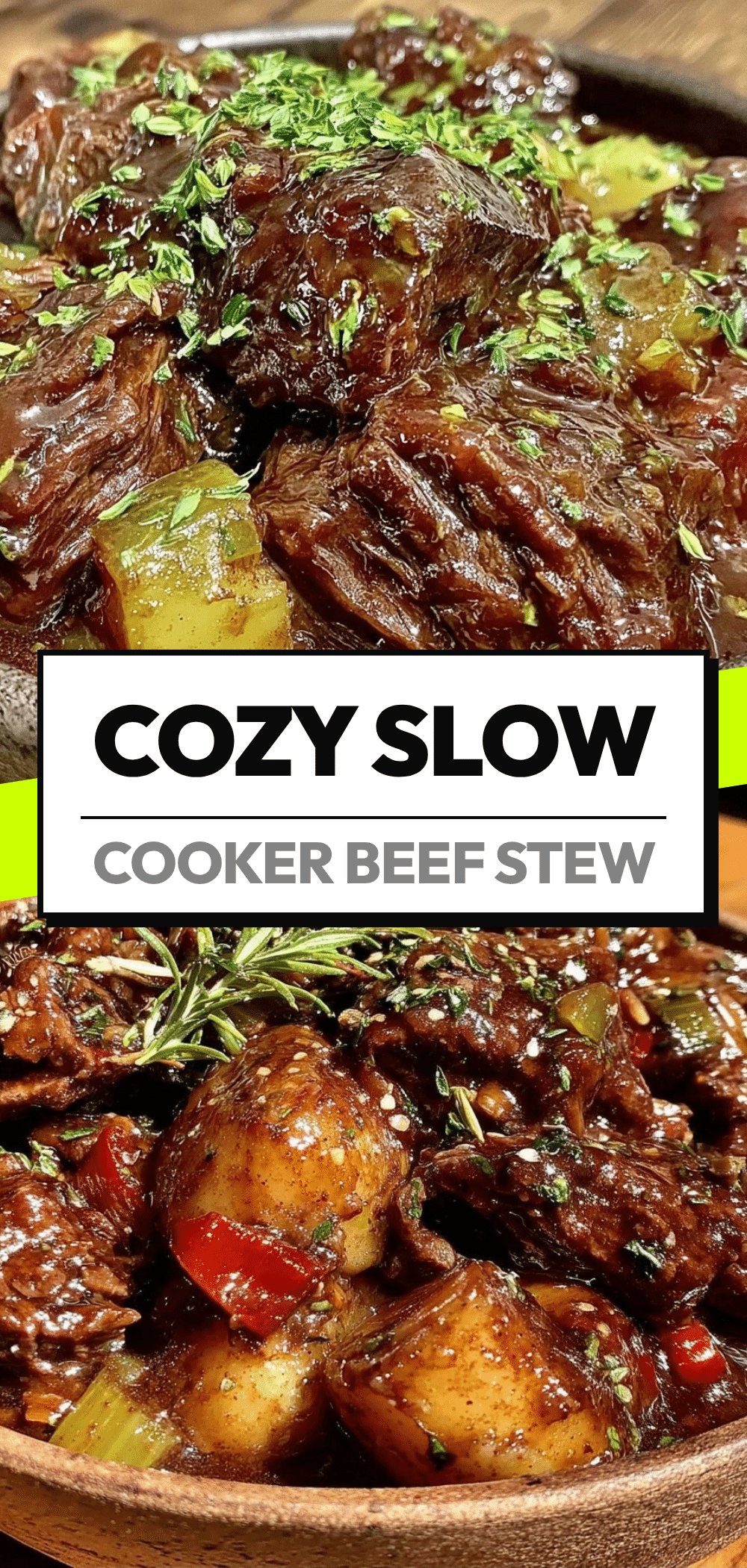
Slow Cooker Beef Stew: The Way My Nana Made It
- Total Time: 8 hours
- Yield: 6 servings 1x
Description
A comforting, slow-cooked beef stew made with chuck roast, red wine, and fresh herbs. This recipe emphasizes searing the meat for depth of flavor and slow cooking for tender, melt-in-your-mouth results.
Ingredients
- 3 lbs beef chuck roast, cut into 1.5-inch cubes
- 3 tbsp all-purpose flour
- Salt and black pepper, to taste
- 2 tbsp oil (for searing)
- 1 large yellow onion, diced
- 4 cloves garlic, minced
- 4 large carrots, chopped into chunks
- 1.5 cups dry red wine (such as Cabernet Sauvignon or Merlot)
- 2 cups low-sodium beef broth
- 2 sprigs fresh rosemary
- 4 sprigs fresh thyme
- 1 dried bay leaf
- 2 tbsp cornstarch mixed with 2 tbsp cold water (for thickening)
Instructions
- Pat the beef cubes completely dry with paper towels and toss them in a bowl with the flour, salt, and pepper until evenly coated.
- Heat 2 tablespoons of oil in a large skillet over medium-high heat. Sear the beef in batches to avoid overcrowding, browning each side for 2-3 minutes until a deep crust forms. Transfer to a plate.
- Reduce heat to medium. Add diced onion to the skillet and cook for 3-4 minutes until soft. Add garlic and cook for 30 seconds until fragrant, then add carrots and cook for 1 minute.
- Pour in the red wine and scrape the bottom of the pan to release brown bits (fond). Simmer for 1 minute.
- Transfer the wine mixture to a 6-quart slow cooker. Add the seared beef, beef broth, rosemary, thyme, and bay leaf. Stir gently.
- Cover and cook on LOW for 6-8 hours until the beef is fork-tender.
- If the sauce is too thin, stir in the cornstarch slurry. Cook on HIGH for an additional 15-20 minutes to thicken.
- Remove herb sprigs and bay leaf before serving. Adjust seasoning with salt and pepper if needed.
Notes
Do not skip searing the beef for maximum flavor. Pat the meat dry before searing to ensure a good crust. If you don’t drink alcohol, substitute the wine with beef broth and a tablespoon of balsamic vinegar. For a gluten-free version, swap all-purpose flour for cornstarch. The stew tastes even better the next day as flavors meld.
- Prep Time: 15 minutes
- Cook Time: 6-8 hours
- Category: Main Course
- Cuisine: American
Nutrition
- Serving Size: 1 bowl
- Calories: 450
- Sugar: 6
- Sodium: 600
- Fat: 18
- Saturated Fat: 6
- Carbohydrates: 25
- Fiber: 4
- Protein: 35
Keywords: slow cooker beef stew, beef stew with red wine, comfort food, nana's recipe, hearty stew, easy dinner


