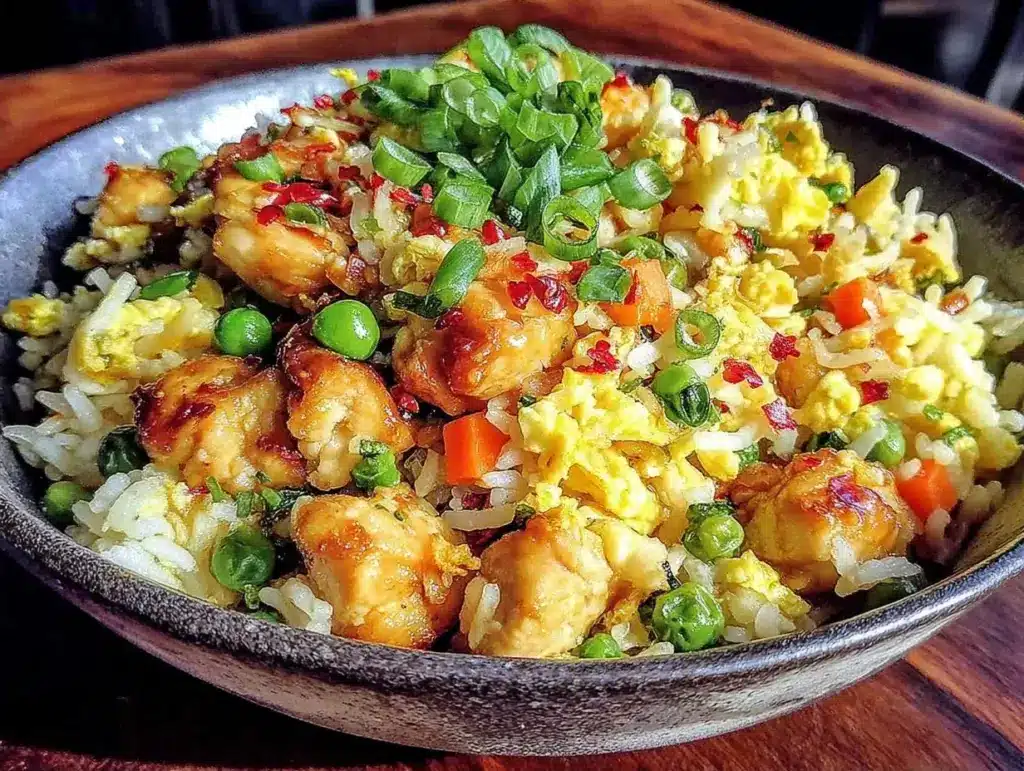
Last Tuesday, I was staring at my fridge at 7:30 PM, feeling that familiar post-work slump. The takeout menu was open on my phone, and I was about to order from the same Chinese spot down the street. But then I saw a bag of rice in the back of the pantry that had been sitting there for three weeks. It was perfectly dry, perfectly cold, and about to become the star of the show.
I didn’t have time to cook fresh rice. I didn’t have time to marinate chicken. I just had leftovers and a craving for something salty, savory, and slightly charred. So I threw together what I thought would be a mediocre dinner. Thirty minutes later, my partner walked in, took one bite, and asked, “Did you order out? This tastes exactly like the place on 4th Street.”
I’ve been making this Restaurant Chicken Fried Rice Better Than Takeout recipe for months now. It’s become my secret weapon for weeknights when I’m tired but refuse to settle for greasy, soggy takeout. The secret isn’t fancy ingredients. It’s not expensive soy sauce. It’s actually just one specific technique involving cold rice and high heat that changes everything.
People ask me all the time why their fried rice turns out mushy or bland while restaurant versions are perfect. The difference is almost always texture. When you get the grain separation right, the whole dish transforms. This Restaurant Chicken Fried Rice Better Than Takeout method gives you that distinct, slightly crispy bite that you just can’t get with freshly cooked rice. I’ve tested this dozens of times, tweaking the ratios and the heat, until I landed on the version that actually works every single time.
If you’re tired of paying $15 for a container of soggy rice, you need to try this. It’s faster than delivery, cheaper than delivery, and honestly? It tastes better because you control the quality of the chicken and the freshness of the veggies. Let’s get into why this specific approach works so well.
Why You’ll Love This Fried Rice Recipe
Here’s the thing about fried rice. Most people think it’s just “leftover rice with stuff thrown in.” But the best versions are actually a study in texture and heat control. Here is why this Restaurant Chicken Fried Rice Better Than Takeout method is going to change your weeknight routine:
- The “Day-Old” Secret — Freshly cooked rice is sticky. It clumps. It turns into mush in the pan. Using rice that has been refrigerated for 24 hours removes excess moisture, giving you those distinct, separate grains that restaurants pride themselves on.
- High Heat Wok Char — You don’t need a wok, but you do need high heat. Searing the chicken and veggies quickly creates tiny bits of caramelization (the Maillard reaction) that give it that smoky, restaurant-style flavor without needing artificial additives.
- Pantry Staples Only — You likely already have the soy sauce, sesame oil, and eggs in your kitchen. This Restaurant Chicken Fried Rice Better Than Takeout recipe relies on what you have, not a trip to three different specialty stores.
- Protein Versatility — I use chicken thighs for juiciness, but this method works with shrimp, pork, or even just extra tofu. It’s a flexible framework, not a rigid rulebook.
- Speed — From cold rice to hot plate takes about 15 minutes. That is faster than waiting for a delivery driver to find your apartment.
This is my go-to when dinner needs to just work. It’s reliable, it’s delicious, and it proves that home cooking can beat the big chains.
Key Ingredients for Perfect Fried Rice
The beauty of this Restaurant Chicken Fried Rice Better Than Takeout recipe is that it doesn’t require exotic ingredients. However, the quality of your basics matters. Here is exactly what I use and why.
Jasmine Rice (3 cups cooked, chilled / 600g)
Long-grain jasmine is non-negotiable for me. It’s fragrant and has a lower starch content than short-grain rice, which helps prevent clumping. Cold is key. Cook the rice a day ahead, spread it on a baking sheet to cool, then refrigerate uncovered. This dries out the surface of the grains. If you don’t have day-old rice, you can cook it fresh and spread it out on a tray in the freezer for 20 minutes, but the fridge is better.
Chicken Thighs (1 lb / 450g)
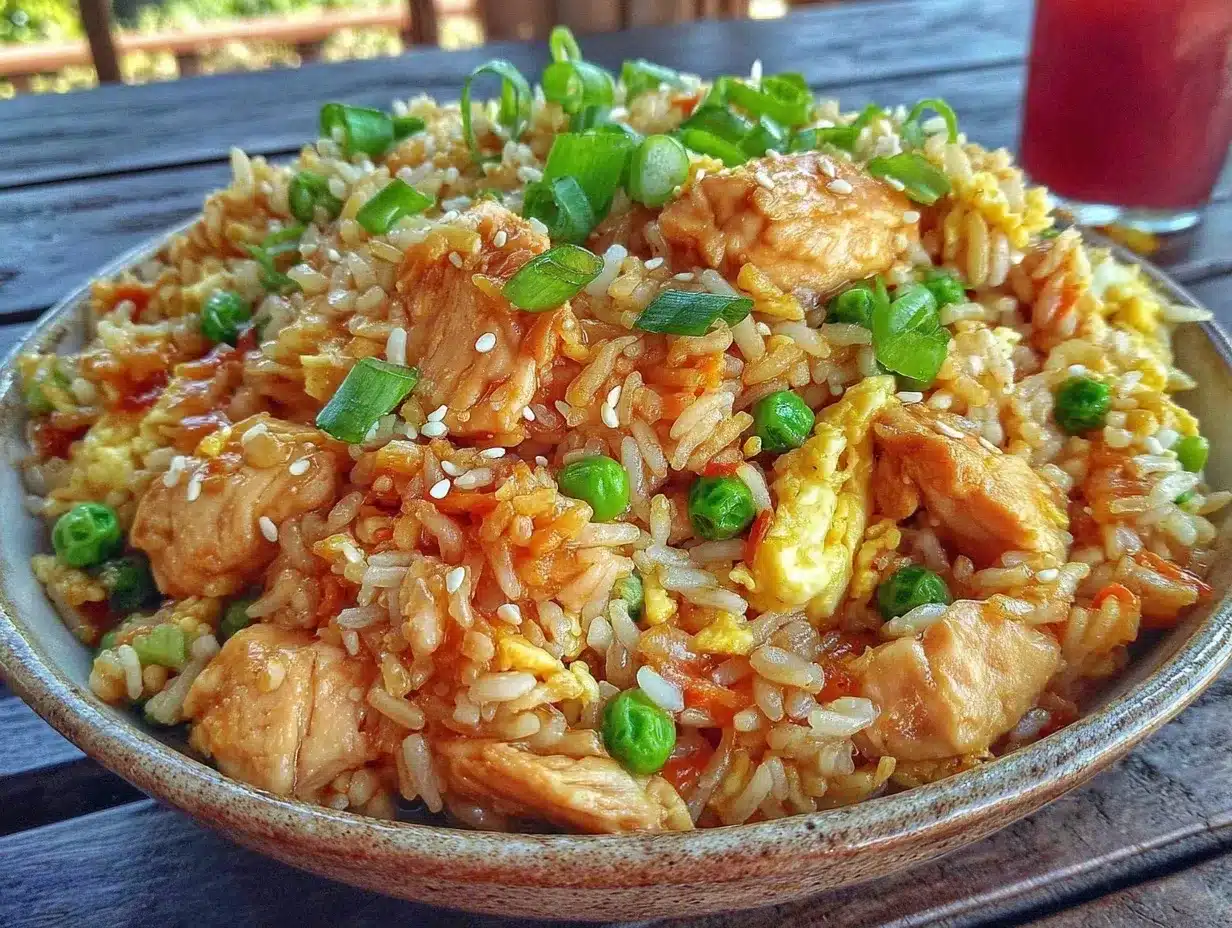
I use boneless, skinless chicken thighs over breasts. Thighs have more fat and connective tissue, meaning they stay juicy even when cooked at high heat. Breasts tend to dry out and turn rubbery in a hot wok. Cut them into 1/2-inch cubes so they cook fast and distribute evenly.
Large Eggs (3 large / 150g)
Whisked eggs create little fluffy curds that coat the rice. I use three eggs for this amount of rice. Don’t skip this step—eggs add richness and protein, and they help bind the flavors together.
Green Onions (4 stalks / 60g)
Use the white parts for cooking (they have a sharper, oniony flavor) and the green parts for garnish (they add color and freshness). Chop them separately so you can add them at different stages.
Garlic and Ginger (2 cloves garlic / 1 tbsp fresh ginger, minced)
Fresh is mandatory here. Jarred ginger tastes metallic and dull. Fresh ginger adds a bright, spicy warmth that cuts through the soy sauce. Mince it finely so it disperses evenly.
Soy Sauce (3 tbsp / 45ml)
I use regular Kikkoman or a similar brand. Some people prefer tamari for gluten-free, but standard soy sauce has a depth of flavor that’s hard to beat. Do not use “light” soy sauce; it’s too salty and lacks body. You need the full flavor profile.
Toasted Sesame Oil (1 tsp / 5ml)
This is the finisher. It has a very strong, nutty aroma. A little goes a long way. Add it at the very end, off the heat, to preserve its flavor. If you cook it too long, it turns bitter.
Vegetable Oil (2 tbsp / 30ml)
For frying, you need a high smoke-point oil. Vegetable, canola, or peanut oil work best. Olive oil will burn at the high heat needed for fried rice.
Tools You’ll Need
You don’t need fancy equipment. Here’s what I use. If you have these, you’re good to go.
Large Skillet or Wok — I use a 12-inch non-stick skillet. It’s easier to store than a wok and works perfectly on home stoves. A carbon steel wok is great if you have one, but a wide skillet ensures you have enough surface area for the rice to spread out and dry slightly.
Rubber Spatula — Metal utensils can scratch non-stick pans. A sturdy rubber spatula helps you scrape the bottom of the pan and break up the rice clumps effectively.
Baking Sheet — Essential for cooling the rice. If you don’t have day-old rice, use this to spread it out.
Mortar and Pestle (Optional) — I love using this for the ginger and garlic. It crushes the fibers better than a knife, releasing more flavor. But a fine mince with a chef’s knife works just as well.
How to Make It
Let’s walk through the process. This Restaurant Chicken Fried Rice Better Than Takeout method relies on speed and heat. Don’t overthink it, but do pay attention to the texture.
Step 1: Prep the Chicken (5 minutes)
Pat your chicken thighs dry with paper towels. Moisture is the enemy of searing. If the chicken is wet, it will steam instead of brown. Cut into 1/2-inch cubes. Season lightly with salt and pepper. In a small bowl, mix 1 teaspoon of cornstarch with 1 tablespoon of water and toss the chicken in it. This “velveting” technique keeps the chicken tender and juicy. It sounds fancy, but it’s just a little starch slurry.
Step 2: Scramble the Eggs (2 minutes)
Heat your skillet or wok over medium-high heat. Add 1 tablespoon of oil. Once it shimmers, pour in the whisked eggs. Let them sit for 10 seconds, then gently push them around. You want soft, fluffy curds, not browned, rubbery omelets. Remove the eggs to a plate immediately. If you leave them in the pan, they’ll overcook.
Step 3: Sear the Chicken (4 minutes)
Wipe out the pan if needed (you want that heat back up). Add another tablespoon of oil. Increase heat to high. Add the chicken in a single layer. Don’t crowd the pan! If you crowd it, the temperature drops, and the chicken steams. Cook for 2 minutes without moving it to get a good sear. Then flip and cook for another 2 minutes until cooked through. Remove chicken to the plate with the eggs.
Step 4: Fry the Aromatics (1 minute)
Keep the heat high. Add a tiny splash of oil if the pan looks dry. Add the white parts of the green onions, garlic, and ginger. Stir-fry for just 30-60 seconds. You want them fragrant, not browned. Garlic burns in seconds, so watch it closely.
Step 5: The Rice (3 minutes)
Add the cold rice to the pan. This is the most important step. Use your spatula to break up any clumps. Press the rice down against the hot surface. Let it sit for 30 seconds, then stir. Repeat this “press and stir” motion. You are trying to dry out the grains and get them slightly crispy. This takes about 2-3 minutes. The rice should start to look dry and separate easily.
Step 6: Season and Combine (2 minutes)
Return the chicken and eggs to the pan. Drizzle the soy sauce over the rice. Toss everything together vigorously. The soy sauce should coat every grain. Taste it. Need more salt? Add a splash more. Need more umami? A dash of oyster sauce works here, but soy is fine.
Step 7: Finish and Serve (1 minute)
Turn off the heat. Drizzle the toasted sesame oil over the top. Toss in the green onion greens. Give it one final mix. Serve immediately. The residual heat will finish cooking the greens slightly.
Total Time: 15 minutes. Cook Time: 12 minutes. Prep Time: 3 minutes.
Expert Tips for Success
Here’s everything I learned from making this too many times. These tips are the difference between “good” and “restaurant quality.”
The Rice Must Be Cold
I cannot stress this enough. Freshly cooked rice has high moisture content. When you hit it with oil, it becomes a sticky, mushy mess. Cold rice from the fridge has retrograded starches, meaning it’s firmer and drier. If you forget to prep, cook the rice, spread it on a baking sheet, and put it in the freezer for 20 minutes. It works in a pinch.
High Heat is Non-Negotiable
Home stoves don’t get as hot as restaurant woks. To compensate, you need to work fast. Don’t let the pan cool down between steps. If you’re cooking for a crowd, cook in batches. Crowding the pan lowers the temperature and leads to steaming, not frying.
Don’t Over-Sauce
It’s tempting to drown the rice in soy sauce for flavor. But too much liquid makes the rice soggy. Start with 3 tablespoons. Taste. Add more only if needed. The rice should be moist, not wet. The sauce should cling to the grains, not pool at the bottom.
Common Problems & Solutions
- Rice is mushy: Your rice was too fresh or too wet. Next time, use day-old rice or freeze fresh rice.
- Chicken is dry: You cooked it too long or used breast meat. Use thighs, or take it off the heat as soon as it’s no longer pink.
- Flavor is bland: You didn’t salt enough. Rice absorbs salt. Taste before serving and adjust.
Recipe Variations
Once you’ve nailed the basic version, here’s how to mix it up. This Restaurant Chicken Fried Rice Better Than Takeout framework is incredibly adaptable.
Shrimp Fried Rice
Swap the chicken for 1 lb of peeled, deveined shrimp. Shrimp cooks faster, so add them after the aromatics and cook for just 2 minutes before adding the rice. They pair beautifully with the ginger and garlic.
Vegetable Loaded
Add diced carrots, peas, and corn. Sauté the carrots with the aromatics since they take longer to cook. The peas and corn can go in with the rice. This adds sweetness and color.
Spicy Sichuan Style
Add 1 tablespoon of Doubanjiang (fermented bean paste) or chili crisp to the oil before adding the aromatics. This adds a deep, spicy heat that is addictive. Serve with extra chili oil on top.
Dairy-Free Option
This recipe is naturally dairy-free. Just ensure your soy sauce is gluten-free if you have a sensitivity, using tamari instead.
Vegan Version
Skip the eggs and chicken. Use extra firm tofu, pressed and cubed. Pan-fry the tofu until crispy before setting aside. Add it back in at the end. The texture holds up well.
Serving & Storage
Serving
I serve this with a simple side of steamed broccoli or bok choy to cut the richness. A drizzle of sriracha or chili garlic sauce on top adds a nice kick. It pairs well with a light beer or a green tea.
Storage
Refrigerator: Store in an airtight container for up to 3 days. The flavors actually meld and improve overnight.
Freezer: This freezes well for up to 1 month. Thaw in the fridge and reheat in a skillet with a splash of water to restore moisture. It doesn’t freeze perfectly (rice can get slightly softer), but it’s still delicious.
Reheating: Avoid the microwave if you can. It makes rice rubbery. Reheat in a skillet over medium heat with a teaspoon of water to steam it back to life.
Nutrition Information
I’m not a nutritionist, but here’s the breakdown. This is comfort food with oil and soy sauce. It’s not diet food, but it’s better than takeout because you know what’s in it.
Per Serving (approximate):
| Nutrient | Amount |
|---|---|
| Calories | 450 |
| Protein | 25g |
| Carbs | 55g |
| Fat | 15g |
| Fiber | 2g |
| Sodium | 800mg |
The sodium is high due to the soy sauce, so adjust to taste. If you’re watching salt, use low-sodium soy sauce and reduce the amount slightly.
Final Thoughts
Making Restaurant Chicken Fried Rice Better Than Takeout at home is one of those small victories that makes cooking worth it. It’s fast, it’s flavorful, and it uses what you have. I’ve made this while helping my kids with homework, while waiting for a date to shower, and on lazy Sundays. It never fails.
If you try this, drop a comment! I love hearing how it turns out in your kitchen. Did you add extra veggies? Did you use shrimp? I want to know. And if you’re looking for more easy weeknight wins, check out my crispy air fryer chicken thighs for another versatile protein base. Or if you need a side dish, my smoked chorizo queso dip is a crowd-pleaser that pairs surprisingly well with rice bowls.
Happy cooking!
FAQs
Can I use short-grain rice?
You can, but the texture will be stickier and chewier. Jasmine or basmati is preferred for that distinct, separate grain texture. If you only have short-grain, spread it out on a tray and refrigerate for longer (4+ hours) to dry it out more.
Why is my fried rice soggy?
Usually, it’s because the rice was too fresh or the pan was too crowded. Make sure your rice is cold and dry. Cook in batches if you’re making a large amount. Also, don’t add too much soy sauce at once.
Can I make this ahead of time?
You can prep the chicken and chop the veggies ahead of time. But cook the rice fresh the day before. Cooking and storing it properly is the key to texture. If you cook, cool, and store the rice, you’re set for the week.
What is the “one trick” mentioned in the title?
The trick is using cold, day-old rice and high heat. Cold rice has less moisture, which allows it to fry rather than steam. High heat creates the char. Combine those two, and you get restaurant-quality texture.
Can I use leftover rice from yesterday?
Yes! That is actually the best kind. Just make sure it’s stored in an airtight container in the fridge. If it’s dried out completely, add a splash of water when reheating or cooking.
Is this recipe gluten-free?
Standard soy sauce contains wheat. To make it gluten-free, swap the soy sauce for tamari or coconut aminos. Everything else in the base recipe is naturally gluten-free.
Pin This Recipe!

Restaurant Chicken Fried Rice Better Than Takeout
- Total Time: 15 minutes
- Yield: 4 servings 1x
Description
A quick and flavorful weeknight dinner that replicates restaurant-quality fried rice at home using cold rice and high heat for perfect texture.
Ingredients
- 3 cups cooked jasmine rice, chilled (day-old)
- 1 lb boneless, skinless chicken thighs, cut into 1/2-inch cubes
- 3 large eggs, whisked
- 4 stalks green onions, chopped (white and green parts separated)
- 2 cloves garlic, minced
- 1 tbsp fresh ginger, minced
- 3 tbsp soy sauce
- 1 tsp toasted sesame oil
- 2 tbsp vegetable oil (divided)
- 1 tsp cornstarch mixed with 1 tbsp water (for velveting chicken)
- Salt and pepper to taste
Instructions
- Pat chicken thighs dry and cut into 1/2-inch cubes. Season lightly with salt and pepper. Toss with the cornstarch slurry to velvet the chicken.
- Heat a large skillet or wok over medium-high heat with 1 tablespoon of vegetable oil. Pour in whisked eggs and scramble into soft curds. Remove eggs to a plate.
- Increase heat to high. Add another tablespoon of oil. Sear chicken in a single layer for 2 minutes without moving, then flip and cook for 2 more minutes until done. Remove to the plate with eggs.
- Keep heat high. Add a splash of oil if needed. Stir-fry white parts of green onions, garlic, and ginger for 30-60 seconds until fragrant.
- Add cold rice to the pan. Break up clumps and press rice against the hot surface. Let sit for 30 seconds, then stir. Repeat for 2-3 minutes until grains are dry and separated.
- Return chicken and eggs to the pan. Drizzle soy sauce over the rice and toss vigorously to coat.
- Turn off heat. Drizzle with toasted sesame oil and toss in green onion greens. Serve immediately.
Notes
The key to this recipe is using cold, day-old rice to ensure separate grains and avoid mushiness. High heat is essential for achieving the ‘wok char’ flavor. If you don’t have day-old rice, spread freshly cooked rice on a baking sheet and refrigerate for at least 20 minutes or freeze for 20 minutes to dry it out. Do not crowd the pan when cooking chicken to ensure proper searing.
- Prep Time: 3 minutes
- Cook Time: 12 minutes
- Category: Main Course
- Cuisine: Chinese
Nutrition
- Serving Size: 1 plate
- Calories: 450
- Sugar: 2
- Sodium: 800
- Fat: 15
- Saturated Fat: 4
- Carbohydrates: 55
- Fiber: 2
- Protein: 25
Keywords: fried rice, chicken fried rice, restaurant style fried rice, quick dinner, weeknight meals, better than takeout, jasmine rice, wok cooking


