There is a specific kind of panic that hits at 6:30 AM on a Sunday. It’s the realization that you promised your family a “special” breakfast, you have zero energy for standing over a griddle flipping individual slices, and the last thing you want is to serve cold cereal to people who are clearly expecting something from a diner menu. Last year, I fell into this trap. I woke up exhausted, stared at my half-asleep kids, and realized I was about to fail at being the fun parent who makes pancake mountains.
So, I threw together a messy casserole in a panic. I just stacked some stale bread, poured over a custard I whipped up with whatever eggs and milk were left, and tossed on some cinnamon sugar. I put it in the oven while I went back to bed. The result? It was… fine. But it was also soggy. Dense. Like eating a wet sponge that tasted vaguely of vanilla. My kids ate it politely, but I knew I had let them down. That soggy disaster stayed with me. I hated the texture. I hated that it looked like a breakfast casserole had given up.
For the next six months, I refused to make it again. Until last month. My mother-in-law was visiting, and she asked, “What about that French toast casserole? It was amazing.” I looked at her, confused. “What are you talking about? I made a disaster.” She laughed and said, “No, the one at that little bistro downtown was amazing. Why don’t you make that?”
That was the spark. I realized I wasn’t trying to recreate the bistro version; I was trying to fix my own. I spent the next few weeks testing. I played with bread types. I adjusted the custard ratios. I fought a losing battle against sogginess until I finally cracked the code. And let me tell you, when I pulled this new version out of the oven this past weekend, the smell alone stopped my husband in the hallway. He didn’t even wait for it to cool. He just took a fork and dug in.
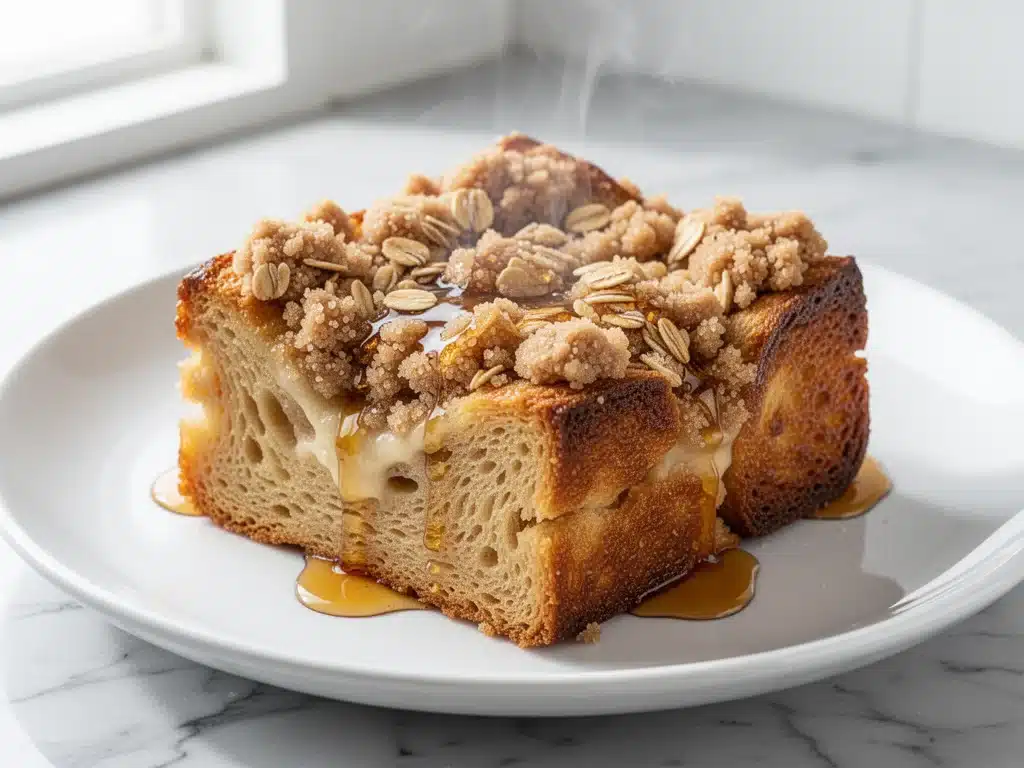
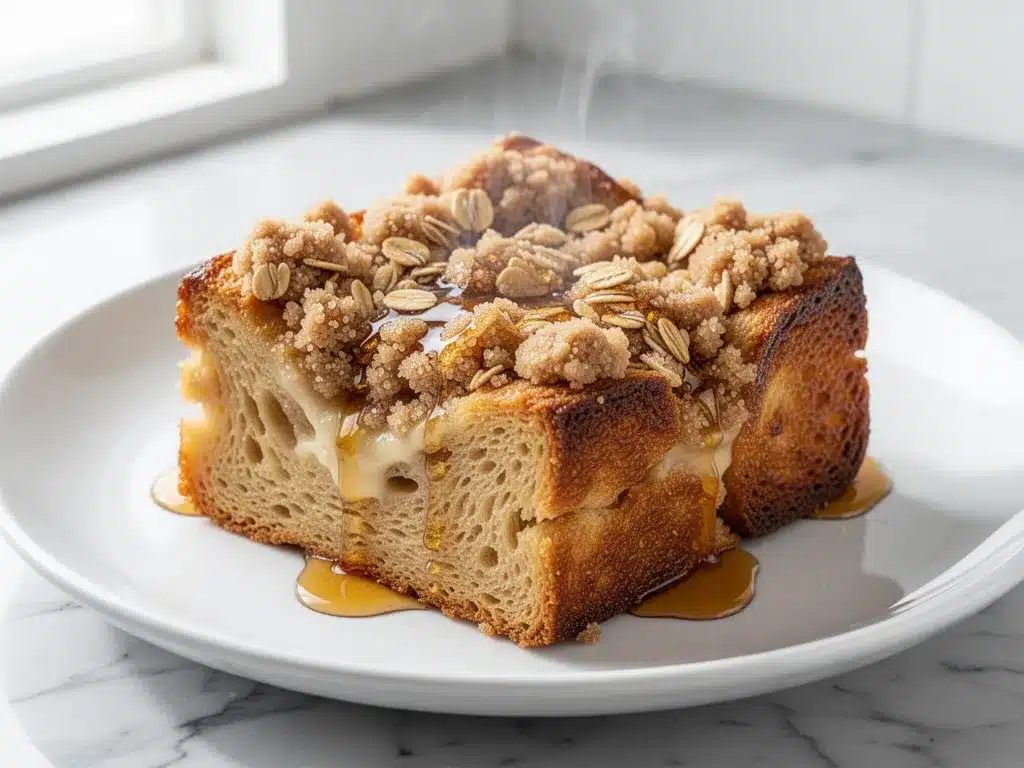
This is the Never-Soggy Overnight French Toast Casserole with Streusel. It’s crispy on top, custardy but not mushy on the inside, and packed with enough buttery crumble to make you question whether you’re eating breakfast or dessert. It’s better than takeout, it’s easier than flipping pancakes for twelve people, and it’s going to save your lazy weekends forever.
Why You’ll Love This Recipe
I’ve made this casserole so many times that my kids now set the table for it before I even preheat the oven. It’s become the ultimate crowd-pleaser for brunch, holidays, and those rare Sunday mornings when we actually want to sit down and talk. But here’s the thing—it’s not just about the taste. It’s about the stress-free magic of it.
Zero Morning Stress — Seriously, this is the biggest selling point. You do everything the night before. The bread soaks up the custard while you sleep. When you wake up, you just pop it in the oven. No standing over a hot stove, no burning your fingers on a griddle, no frantic scrambling. You get to sleep in.
Actually Crispy, Not Soggy — I know, I know. “Overnight French toast” usually equals “wet bread.” Not this recipe. By using day-old bread and a specific custard-to-bread ratio, the center stays soft and custardy while the top gets that golden, crispy crunch. The streusel adds another layer of texture that keeps it interesting.
Feed a Crowd for Cheap — This feeds 8-10 people easily. And because it’s mostly bread and eggs, it’s incredibly budget-friendly. I served this to a brunch group of ten, and my friend asked for the recipe because it looked like something from a high-end hotel buffet. It cost me less than $10 to make.
The Streusel Factor — A plain French toast casserole is good. This one with the brown sugar, butter, and cinnamon crumble on top? It’s legendary. It adds that bakery-style finish that makes people think you spent hours on it. (You didn’t. You slept.)
Makes Amazing Leftovers — And yes, there are leftovers. Usually. Reheating a slice in the toaster oven brings back that crispiness. It tastes almost as good cold straight from the fridge, which is a miracle in itself.
This recipe has completely changed our Sunday routine. It’s my go-to when I want to feel fancy but have zero energy. It’s reliable, delicious, and makes everyone happy.
Ingredients You’ll Need
Here’s the best part: you probably have most of this already in your pantry and fridge. I’m particular about three ingredients here—the bread, the butter, and the cream—but for everything else, standard grocery store stuff works perfectly.
For the Bread Base
Day-Old Brioche or Challah (1 pound / 450g) — This is non-negotiable for texture. Fresh bread is too soft and will turn into mush. Day-old bread is dry and sturdy enough to soak up the custard without falling apart. Brioche is rich and buttery, Challah is slightly sweeter. Both work beautifully. If you can’t find either, a sturdy white sandwich bread or even a day-old baguette works, but the texture won’t be quite as luxurious.
Butter, softened (2 tablespoons / 30g) — For greasing the baking dish. I use unsalted butter so I can control the salt. Margarine? Don’t. It just doesn’t give you that rich flavor or proper browning.
For the Custard
Eggs (6 large / approx. 300g) — Room temperature eggs mix into the custard more evenly. If you’re in a rush, just drop them in warm water for 5 minutes. Don’t skip this if you can help it.
Heavy Cream (2 cups / 480ml) — This is what gives it that rich, custardy center. You can use half-and-half for a lighter version, but it won’t be as decadent. Whole milk is too thin and will make it less rich. I don’t recommend skimping here.
Whole Milk (1 cup / 240ml) — Used to balance the heavy cream. It lightens the texture slightly so it’s not too dense.
Granulated Sugar (½ cup / 100g) — Sweetens the custard. If you like it less sweet, reduce to ⅓ cup. The streusel adds more sweetness, so taste your custard before pouring if you’re unsure.
Pure Vanilla Extract (2 teaspoons / 10ml) — Use the real stuff. I know it’s expensive, but fake vanilla tastes chemical in a delicate custard. It makes a noticeable difference.
Ground Cinnamon (1 teaspoon) — Classic flavor. If you want it spicier, add a pinch of nutmeg or cardamom.
Salt (½ teaspoon) — Crucial. It balances the sweetness and brings out the vanilla flavor. Don’t skip it.
For the Streusel Topping
All-Purpose Flour (½ cup / 60g) — The base of the crumble.
Brown Sugar, packed (½ cup / 100g) — Gives that molasses depth. Light or dark both work, but dark is richer.
Unsalted Butter, cold and cubed (¼ cup / 55g) — Cold butter is key here. You want to cut it into the flour to create little pebbles. If the butter is melted, you’ll just get a paste.
Ground Cinnamon (½ teaspoon) — For that classic cinnamon roll vibe.
Equipment Needed
You don’t need fancy equipment for this. Here’s what I actually use.
9×13 Inch Baking Dish — I use a ceramic one because it distributes heat evenly. Glass works too, but you might need to watch it closely so the bottom doesn’t burn. A metal pan is fine, just grease it well.
Large Mixing Bowl — Big enough to whisk all those eggs and cream without spilling. I use a 4-quart bowl.
Whisk — For breaking up the eggs and emulsifying the custard. A fork works in a pinch, but a whisk is faster and ensures no lumps of egg white remain.
Fork or Pastry Cutter — To make the streusel. I just use two forks to cut the cold butter into the flour. It’s satisfying and effective.
Measuring Cups and Spoons — Standard stuff. Dollar store versions work fine.
Parchment Paper — Optional, but I line the bottom of my dish just to be safe. It makes cleanup way easier, especially if the sugar caramelizes a bit.
How to Make It: Step-by-Step
Alright, let’s make this! I’m walking you through exactly how I do it, including the little tricks I’ve picked up over the years.
Step 1: Prep the Bread (5 minutes)
Start with your day-old bread. If it’s slightly stale but not rock-hard, that’s perfect. Tear or cut the bread into 1-inch cubes. You want irregular shapes—it creates more surface area for the custard to soak into. Arrange the bread cubes in a single layer in your greased 9×13 baking dish. You don’t need to pack them tight; let them sit loosely. If you’re using a lot of bread, you might need to stack it slightly, but try to keep it as even as possible so it bakes uniformly.
Step 2: Make the Custard (5 minutes)
In your large mixing bowl, whisk the eggs vigorously until they are fully beaten and no whites remain. Add the heavy cream, whole milk, sugar, vanilla extract, cinnamon, and salt. Whisk again until the sugar is mostly dissolved and the mixture is smooth. It should look like a pale yellow liquid. Taste it—it should taste like sweetened vanilla milk. If it’s too sweet, reduce the sugar next time.
Step 3: Pour and Soak (The Most Important Step)
Pour the custard evenly over the bread cubes. Use a spatula or your hands to gently press down on the bread, making sure every piece gets coated. You want the bread to absorb as much liquid as possible. If you have pockets of dry bread, press them down. Once everything is soaked, cover the dish tightly with plastic wrap. Put it in the refrigerator for at least 4 hours, or ideally overnight. This soaking time is what ensures the center is cooked through and creamy, not dry or eggy.
Step 4: Make the Streusel (5 minutes)
While the casserole soaks, make the topping. In a small bowl, combine the flour, brown sugar, and cinnamon. Add the cold, cubed butter. Use your fingers or two forks to rub the butter into the flour mixture. You’re looking for coarse crumbs, like wet sand. Some pieces can be larger—that’s good. It creates those crunchy clusters. Don’t overmix it into a paste. Set it aside.
Step 5: Bake (45-50 minutes)
Preheat your oven to 350°F (175°C). Take the casserole out of the fridge and remove the plastic wrap. Sprinkle the streusel topping evenly over the surface. It might look like a lot, but it’s necessary for that crust. Place the dish in the center of the oven and bake for 45-50 minutes. You’ll know it’s done when the top is golden brown and crispy, and the center is set (it shouldn’t jiggle like Jell-O). If the top is browning too fast, tent it loosely with foil for the last 10 minutes.
Step 6: Rest and Serve (10 minutes)
Take it out of the oven and let it rest for 10 minutes. This is hard, I know. But resting allows the custard to set further, making it easier to cut clean squares. If you cut it immediately, it might fall apart. Serve warm, perhaps with a dusting of powdered sugar or a drizzle of maple syrup if you’re feeling fancy.
Expert Tips & Tricks
Here’s everything I’ve learned from making this dozens of times. These tips will save you from my mistakes.
Bread Must Be Day-Old
I cannot stress this enough. Fresh bread has too much moisture. It will turn your casserole into a bread pudding soup. If you only have fresh bread, toast the cubes in the oven at 300°F for 10 minutes to dry them out first. Let them cool completely before assembling.
Don’t Skimp on the Soak
15 minutes isn’t enough. The bread needs to fully saturate. If you’re short on time, let it sit for 2 hours at least. But overnight is best. The longer it sits, the more the flavors meld and the more evenly it cooks.
Cold Butter for Streusel
If your butter is warm, it will coat the flour and create a dense topping. Cold butter creates steam pockets as it bakes, resulting in those light, crunchy crumbles. Keep it in the fridge until the last second.
Check for Doneness
Insert a knife into the center. If it comes out clean, it’s done. If wet custard sticks to it, give it another 5-10 minutes. Undercooked custard is runny; overcooked custard is rubbery. Aim for just set.
Rest Before Cutting
Patience pays off. Letting it rest for 10 minutes allows the structure to firm up. This makes for beautiful, neat slices that hold together on the plate.
Variations & Substitutions
Once you’ve nailed the basic version, here’s how you can mix it up. I’ve tried all of these.
Berry Burst
Throw 1 cup of fresh or frozen berries (blueberries, strawberries, raspberries) between the bread layers before pouring the custard. The berries burst and create little pockets of juicy sweetness. I use frozen berries directly from the freezer—no need to thaw.
Apple Cinnamon
Sauté 2 chopped apples with a little butter and cinnamon until slightly soft, then layer them in the dish. It tastes like a deconstructed apple pie. Amazing with a caramel drizzle on top.
Chocolate Chip
Sprinkle ½ cup of chocolate chips between the bread layers. It turns it into a dessert-style breakfast. Use semi-sweet for balance.
Gluten-Free
Use gluten-free brioche-style bread. Most brands work well, but check that they are sturdy enough to hold up to soaking. You might need to reduce the soak time slightly if the bread is more delicate.
Dairy-Free
Use dairy-free milk (oat or almond) and dairy-free butter for both the custard and the streusel. It’s not quite as rich, but it’s still delicious. Coconut cream works well in place of heavy cream for extra richness.
Vegan
Use flax eggs (2 tbsp ground flax + 5 tbsp water per egg) and dairy-free butter/milk. The texture will be slightly different, but it’s still a solid option.
Serving & Storage
How to Serve:
I usually serve this straight from the dish at the brunch table—it looks rustic and inviting. But here are other ways I’ve enjoyed it:
Side Dishes:
- Crispy bacon or sausage links
- Fresh fruit salad (berries and melon)
- Simple green salad with a light vinaigrette
- Hash browns (if you want to go all out)
Toppings Bar:
When I have guests, I put out: powdered sugar, maple syrup, fresh berries, and maybe some whipped cream. Everyone customizes their bowl.
Storage Instructions:
Refrigerator:
Store leftovers in an airtight container for up to 4 days. The streusel will soften, but the flavor remains great.
Reheating:
Best method: Reheat individual slices in a toaster oven or regular oven at 350°F for 10-15 minutes. This restores the crispiness.
Microwave method: It works, but the topping will get chewy. Heat in 30-second intervals. If you do this, maybe add a tiny sprinkle of fresh cinnamon to perk it up.
Freezing:
You can freeze the unbaked casserole! Assemble it, cover tightly with foil and plastic, and freeze. When ready to bake, let it thaw in the fridge overnight, then bake as directed (you may need to add 10-15 minutes to the bake time). I don’t recommend freezing the baked leftovers because the texture suffers.
Nutrition Information
I’m not a nutritionist, but here’s the breakdown if you’re tracking. This is a treat, so keep portions in mind.
Per Serving (based on 12 servings):
- Calories: 380
- Protein: 10g
- Carbs: 42g
- Fiber: 1g
- Sugar: 22g
- Fat: 20g
- Saturated Fat: 11g
- Cholesterol: 140mg
- Sodium: 280mg
What’s Good:
- Decent protein from eggs and dairy
- Calcium from the milk and cream
- Can be made lighter with substitutions
What to Know:
- Higher in calories and sugar due to bread, cream, and streusel
- Contains dairy and gluten
- Moderate sodium (use low-sodium broth if adding savory sides)
My Take:
Look, this is comfort food. It’s sweet, rich, and indulgent. It’s not a diet recipe. But it’s way better than takeout, costs less, and I know exactly what’s in it. When I want to make it lighter, I use half-and-half and reduce the sugar. But usually? I just eat a reasonable portion and enjoy it without guilt.
Final Thoughts
So that’s my go-to Never-Soggy Overnight French Toast Casserole with Streusel! I’ve probably talked your ear off at this point, but when you make a recipe this often, you have a lot to say about it.
This has saved lazy mornings more times than I can count. It’s my answer to “what’s for brunch” when I want to impress but have zero energy. My kids are happy, my husband’s happy, and I’m happy because I’m not stressed about cooking.
Make it yours! Try different fruits, swap in your favorite spices, or add chocolate chips. The best recipes are the ones you adapt to your family’s tastes.
If you make this, drop a comment and let me know what you think! I love hearing how recipes turn out in your kitchen. And if something doesn’t work, tell me that too—I’m here to help troubleshoot.
Happy cooking! And I hope your kitchen smells half as good as mine does right now.
Frequently Asked Questions
Can I use fresh bread instead of day-old?
You can, but it’s risky. Fresh bread has too much moisture and will likely turn soggy. If you must use fresh bread, toast the cubes in the oven at 300°F for 10 minutes to dry them out, then let them cool completely before assembling. This mimics day-old bread.
Can I make this ahead and bake it in the morning?
Yes! This is the whole point. Assemble it the night before, cover it, and refrigerate. In the morning, just take it out, add the streusel, and put it in the oven. You might need to add 5-10 minutes to the bake time since the dish starts cold.
Why is my casserole soggy in the middle?
Usually, this means the bread didn’t soak long enough, or the oven temperature was too low. Make sure you’re using day-old bread and letting it soak for at least 4 hours (overnight is best). Also, check your oven temperature with a thermometer; ovens often run cooler than they say.
Can I freeze the baked casserole?
It’s not recommended. The dairy in the custard can separate and become grainy when thawed and reheated. It’s much better to freeze the unbaked, assembled casserole. Thaw it in the fridge overnight, then bake as directed.
What kind of bread is best?
Brioche and Challah are the gold standards because they are rich, slightly sweet, and sturdy. A day-old baguette or even thick-cut white sandwich bread works too, but the texture won’t be as luxurious. Avoid whole wheat or dense breads unless you like a heavier texture.
How do I reheat leftovers without it getting dry?
Add a splash of milk to a skillet, add your leftover slice, and heat gently over low heat, covering the pan. The steam keeps it moist. Alternatively, microwave it with a cup of water in the microwave for 30-60 seconds to create steam.
Can I double this recipe?
Absolutely! Use two 9×13 dishes or a large 9×13 and a smaller 8×8. The cooking times will be similar, but keep an eye on the smaller dish as it might bake faster. Make sure your oven rack is positioned correctly for even baking.
Pin This Recipe!
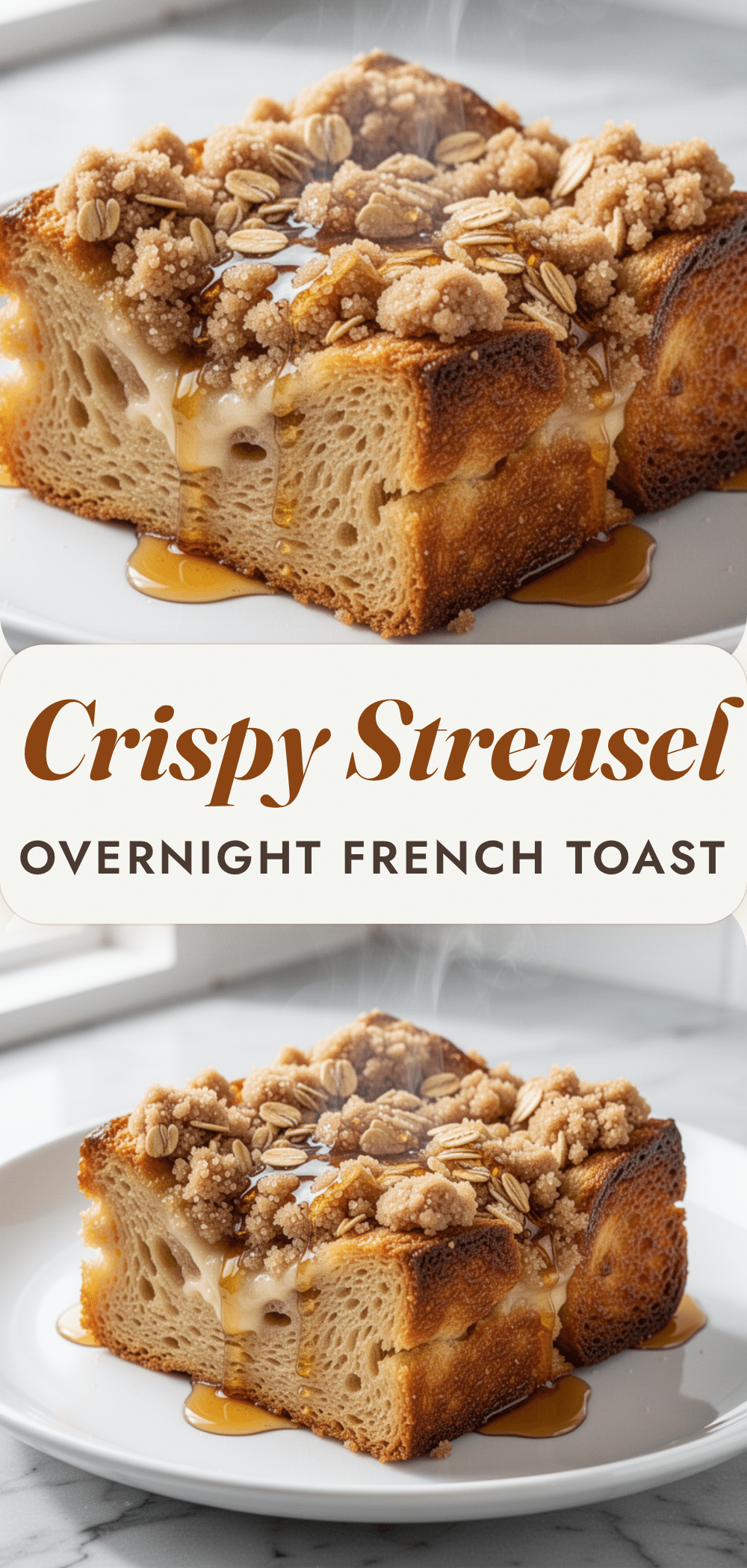
Never-Soggy Overnight French Toast Casserole with Streusel
- Total Time: 1 hour 5 minutes
- Yield: 12 servings 1x
Description
A stress-free, make-ahead breakfast casserole that stays crispy on top and custardy inside, featuring a buttery brown sugar streusel topping.
Ingredients
- 1 pound day-old brioche or challah, cut into 1-inch cubes
- 2 tablespoons unsalted butter, softened (for greasing dish)
- 6 large eggs, room temperature
- 2 cups heavy cream
- 1 cup whole milk
- 1/2 cup granulated sugar
- 2 teaspoons pure vanilla extract
- 1 teaspoon ground cinnamon
- 1/2 teaspoon salt
- 1/2 cup all-purpose flour (for streusel)
- 1/2 cup packed brown sugar (for streusel)
- 1/4 cup unsalted butter, cold and cubed (for streusel)
- 1/2 teaspoon ground cinnamon (for streusel)
Instructions
- Grease a 9×13 inch baking dish with 2 tablespoons of softened butter.
- Tear or cut day-old bread into 1-inch cubes and arrange them in a single layer in the prepared baking dish.
- In a large mixing bowl, whisk eggs vigorously until no whites remain.
- Add heavy cream, whole milk, granulated sugar, vanilla extract, 1 teaspoon cinnamon, and salt to the eggs. Whisk until smooth and sugar is dissolved.
- Pour the custard evenly over the bread cubes. Gently press down on the bread to ensure every piece is coated and soaked.
- Cover the dish tightly with plastic wrap and refrigerate for at least 4 hours, or ideally overnight.
- While the casserole soaks, make the streusel: In a small bowl, combine flour, brown sugar, and 1/2 teaspoon cinnamon. Add cold cubed butter and rub it in with fingers or two forks until the mixture resembles coarse crumbs.
- Preheat oven to 350°F (175°C).
- Remove the casserole from the fridge and uncover. Sprinkle the streusel topping evenly over the surface.
- Bake for 45-50 minutes, or until the top is golden brown and crispy, and the center is set (not jiggly). Tent with foil if browning too quickly.
- Let the casserole rest for 10 minutes before cutting and serving.
Notes
Use day-old bread to prevent sogginess. If using fresh bread, toast cubes at 300°F for 10 minutes to dry them out. Ensure butter for streusel is cold to create crunchy crumbs. Let the casserole rest for 10 minutes after baking to allow the custard to set for clean slicing.
- Prep Time: 15 minutes
- Cook Time: 45-50 minutes
- Category: Breakfast
- Cuisine: American
Nutrition
- Serving Size: 1 slice
- Calories: 380
- Sugar: 22
- Sodium: 280
- Fat: 20
- Saturated Fat: 11
- Carbohydrates: 42
- Fiber: 1
- Protein: 10
Keywords: french toast casserole, overnight breakfast, brunch recipe, streusel topping, make ahead breakfast, brioche french toast


