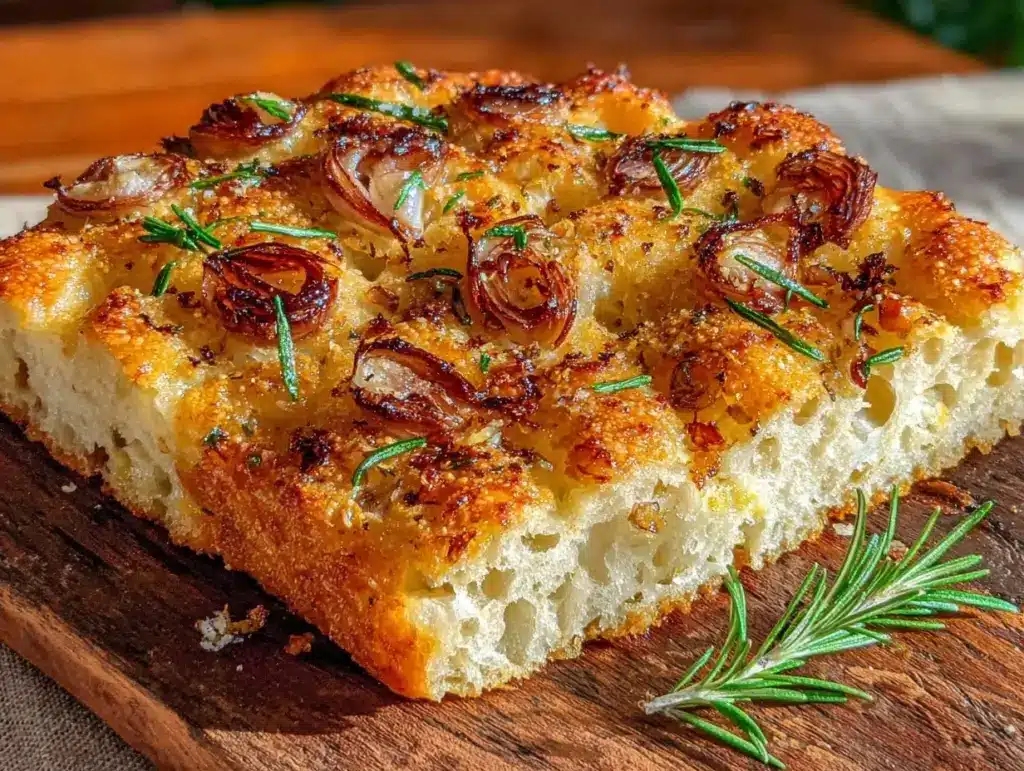
I still remember the first time I pulled a perfect focaccia from the oven. It was late autumn, the air inside my kitchen was thick with the scent of yeast and rosemary, and that golden, dimpled crust crackled as it cooled. My husband walked in, saw the massive sheet pan, and without saying a word, just grabbed a handful of the warm bread and dipped it in the olive oil pool. He didn’t even wait for dinner. That was the moment I knew I had to master this bread. Not just any bread, but beginner sourdough focaccia with seasonal garlic and rosemary.
Sourdough scares a lot of people. I get it. I used to stare at my starter like it was a fragile houseplant I was destined to kill. But here’s the thing about sourdough focaccia: it’s incredibly forgiving. The high hydration and long fermentation time do the heavy lifting for you. You don’t need to be a pro baker to get those signature air pockets and that crispy, chewy texture. In fact, I’ve found that the more you let it rest, the better it gets. This isn’t just about feeding your yeast; it’s about patience, and in return, you get bread that tastes like pure comfort.
I make this beginner sourdough focaccia with seasonal garlic and rosemary whenever I have a slow Sunday or an evening where I don’t mind letting the kitchen smell amazing for a few hours. It’s become my anchor recipe. Whether I’m serving it alongside a simple salad or using it to soak up a rich sauce, it always hits the spot. Plus, using your active sourdough starter means you’re reducing waste and getting that complex, tangy flavor that store-bought bread just can’t match. Let’s get into why this specific combination of ingredients makes this loaf so special, and how you can make it work for you.
Why You’ll Love This
There are a hundred reasons to bake bread, but this one stands out. It’s not just about the taste; it’s about the experience. Here’s why this beginner sourdough focaccia with seasonal garlic and rosemary has earned a permanent spot in my weekly rotation.
- Zero Kneading Required — I’m not a fan of punching dough into submission. This recipe relies on a high-hydration dough that you just mix and fold. That’s it. No arm workouts, no messy flour clouds. You’ll have a smooth, elastic dough in under ten minutes of active work.
- Uses Your Active Starter — If you’ve been feeding your starter and feeling guilty about the discard, this is your redemption. You’ll use a lively, active starter, which gives the bread that distinct sourdough tang without the dense texture of traditional sourdough loaves.
- Seasonal Flavor Profile — By focusing on fresh rosemary and garlic, you’re highlighting what’s currently in season. In spring, the rosemary is tender and bright. In winter, it’s woody and intense. This bread changes with the calendar, keeping your palate interested.
- Restaurant-Quality Crust — The secret is the olive oil. A lot of oil in the pan creates that shatteringly crisp, golden bottom while keeping the interior soft and airy. It’s the kind of crust you usually only get at expensive Italian bakeries.
- Perfect for Meal Prep — This bread actually tastes better the next day. I often make a whole pan on Sunday, slice it, and keep it in the fridge. It’s perfect for sandwiches, dipping, or just eating with a little balsamic vinegar. It pairs beautifully with things like my smoked chorizo queso dip for a quick snack.
This is my go-to when I want to feel like a baker without the stress. It’s reliable, delicious, and smells incredible. Once you try this beginner sourdough focaccia with seasonal garlic and rosemary, you’ll wonder why you ever bought commercial bread again.
Key Ingredients
Let’s talk about what goes into this dough. I keep it simple because with sourdough, less really is more. The quality of your ingredients matters more than ever here, especially since there are no masks to hide behind.
All-Purpose Flour (500g / 3 3/4 cups) — I stick to all-purpose flour for this. Bread flour can be too strong and make the crumb too dense for focaccia. AP flour gives you that tender, open crumb structure I love. Make sure it’s fresh; old flour won’t absorb water properly.
Water (375g / 1 1/2 cups + 2 tbsp, warm) — Hydration is key. I aim for 75% hydration. This is wet, sticky dough. Don’t be afraid of the stickiness. It’s what creates those big holes. Use warm water, around 75-80°F, to help activate the yeast in your starter.
Active Sourdough Starter (100g / 2/3 cup) — This needs to be bubbly and active. Feed it 4-6 hours before you plan to mix. If it’s not risen and domed over the jar, it’s not ready. A lazy starter means flat bread. I’ve learned this the hard way.
Fine Sea Salt (10g / 1 1/2 tsp) — Salt controls the fermentation and adds flavor. Don’t skip it. I use fine sea salt because it dissolves quickly in the wet dough. Kosher salt works too, but you’ll need to adjust the volume.
Extra Virgin Olive Oil (60ml / 1/4 cup + 1 tbsp, plus more for topping) — This is non-negotiable. You need enough oil to coat the pan thoroughly and create a pool on top. I use a high-quality, fruity EVOO. If your oil tastes bitter or grassy, your bread will too. It’s also great for dipping, much like you’d do with crispy baked zucchini fries.
Fresh Rosemary (2 tbsp, finely chopped) — Fresh is mandatory here. Dried rosemary is too woody and lacks the piney aroma. Pick sprigs that are vibrant green. I chop them finely so you get a burst of flavor in every bite.
Garlic (3 cloves, minced) — Fresh garlic, minced fine. I roast it if I want a sweeter, mellower flavor, but for this beginner sourdough focaccia with seasonal garlic and rosemary, raw minced garlic adds a nice pungent kick that balances the richness of the oil.
Tools Needed
You don’t need a fancy stand mixer or expensive gadgets. Here’s what I use to make this beginner sourdough focaccia with seasonal garlic and rosemary without the fuss.
9×13 Inch Metal Baking Pan — Metal conducts heat better than glass or ceramic, giving you that crisp bottom. I use a standard 9×13. If you don’t have one, two 8-inch round pans work, but you’ll need to adjust the baking time slightly.
Large Mixing Bowl — Something wide enough to let you stretch and fold the dough easily. A 6-quart bowl is perfect.
Dough Scraper — This is your best friend with high-hydration dough. It helps you handle the sticky mess without adding extra flour. I have a plastic one and a metal one; both work great.
Pastry Brush — For brushing that extra olive oil on top before baking. It helps the garlic and rosemary stick and ensures even browning.
Instant-Read Thermometer — Not strictly necessary for focaccia, but I like to check my water temperature to ensure it’s not too hot for the yeast.
Cooking Instructions
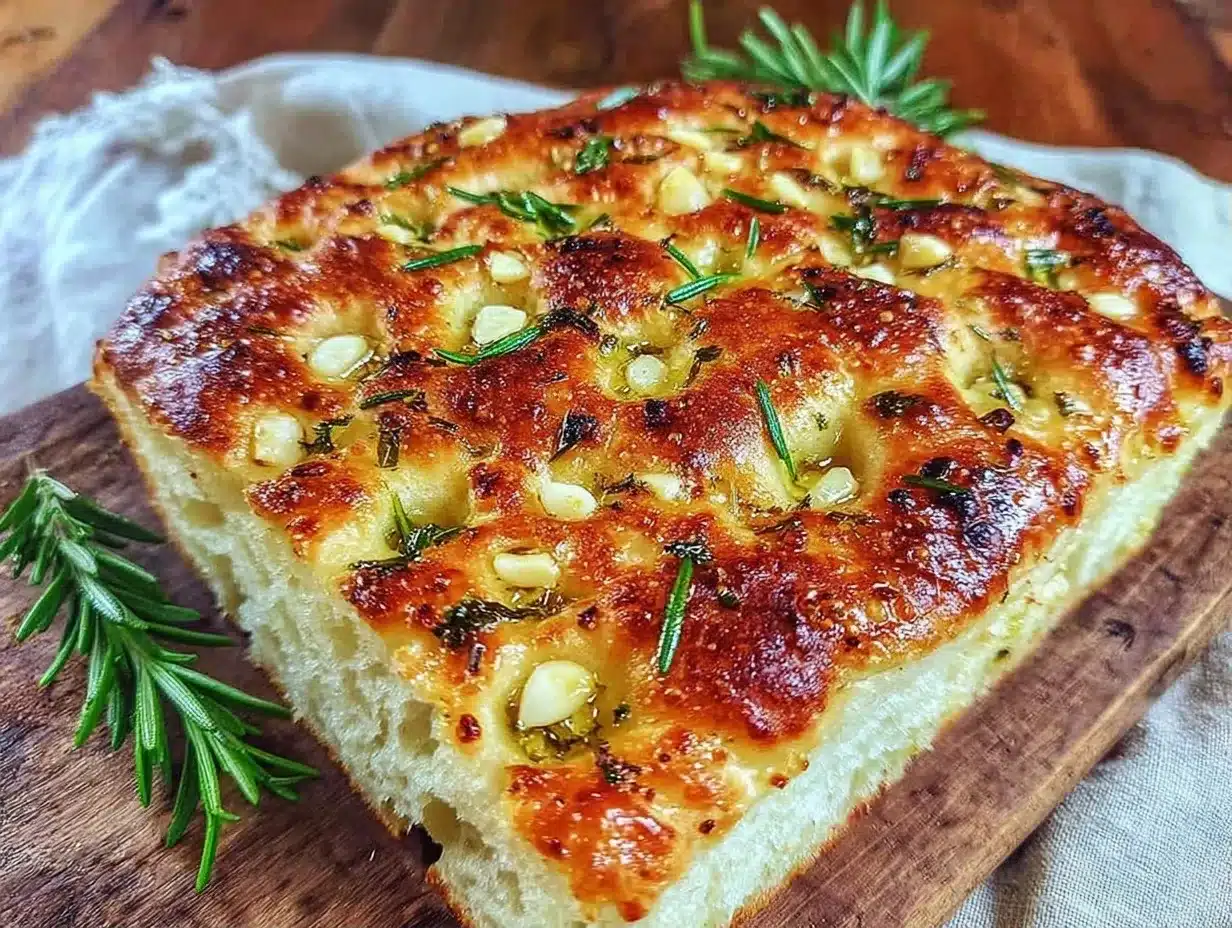
Here’s how to make this beginner sourdough focaccia with seasonal garlic and rosemary. It’s straightforward, but timing is everything. Pay attention to the visuals, not just the clock.
Step 1: Mix the Dough (10 minutes)
In your large bowl, combine the warm water and active sourdough starter. Whisk them together until the starter is dissolved and the mixture looks milky. Add the flour and salt. Mix with a sturdy spoon or your hands until no dry flour remains. The dough will be shaggy and sticky. Cover the bowl with a damp towel or plastic wrap. Let it rest for 30 minutes. This autolyse step helps the gluten develop naturally without kneading.
Step 2: The Stretch and Fold (15 minutes over 2 hours)
After the 30-minute rest, it’s time to build strength. Wet your hands to prevent sticking. Grab one side of the dough, stretch it up, and fold it over the center. Rotate the bowl and repeat this four times, once for each side. You’ll see the dough become smoother and more elastic. Cover and let rest for 30 minutes. Repeat this process three more times, every 30 minutes. By the end of the fourth fold, the dough should be smooth, springy, and hold its shape. This is crucial for trapping gas during the rise.
Step 3: Bulk Fermentation (4-6 hours)
After the final fold, cover the bowl and let the dough rise at room temperature. This is where the sourdough flavor develops. The dough is ready when it has grown by about 50-75% and is jiggly all the way through. If you poke it, it should slowly spring back. In my kitchen, this usually takes about 4-5 hours, depending on the temperature. If it’s hot, it might take less time. If it’s cold, give it more time.
Step 4: Prep the Pan and Shape (10 minutes)
Generously coat your 9×13 baking pan with olive oil. Use enough that the bottom is slick. Pour the dough into the pan. It will be sticky. Wet your hands again and gently stretch the dough to the corners. Don’t force it; if it resists, let it rest for 5 minutes and try again. Once it covers the pan, let it rest for another 10 minutes to relax the gluten.
Step 5: Add Toppings and Second Rise (1-2 hours)
Now for the fun part. Press your fingertips deeply into the dough to create those classic dimples. Go all the way to the pan. Scatter the minced garlic and chopped rosemary evenly over the surface. Drizzle with another tablespoon or two of olive oil. Cover loosely with plastic wrap and let it rise again until puffy and airy. This usually takes 1-2 hours. The dough should jiggle when you shake the pan.
Step 6: Bake (25-30 minutes)
Preheat your oven to 425°F (220°C) while the dough does its final rise. Place the pan in the center rack. Bake for 20 minutes. Rotate the pan halfway through to ensure even browning. The focaccia is done when the top is deep golden brown and the crust sounds hollow when tapped. If the top is browning too fast, tent it with foil. Let it cool in the pan for 10 minutes, then transfer to a wire rack.
Total time: About 8-10 hours from start to finish, mostly inactive rising time. Active work is less than an hour.
Expert Tips
Here’s everything I learned from making this too many times, so you don’t have to make the same mistakes.
The Game-Changers
Don’t Rush the Rise — I used to try to speed things up by putting the dough in a warm spot. It rose fast but tasted flat. Slow fermentation is where the flavor lives. Let it rise until it’s visibly bubbly and expanded, not just by a certain time.
Embrace the Stickiness — Wet hands are your best friend. If you try to handle this dough like a standard bread dough, you’ll add too much flour and end up with a dense brick. Trust the process. The stickiness equals airiness.
Deep Dimples — Don’t be shy with your fingers. Press deep. This isn’t just for looks; it creates more surface area for the oil and toppings, ensuring every bite is flavorful.
Common Problems & Solutions
Dough Didn’t Rise — Your starter was likely inactive. Always feed your starter 4-6 hours before mixing. If it’s not bubbly, don’t use it.
Bread is Dense — You probably under-hydrated the dough or over-floured during shaping. Stick to the water measurements and keep your hands wet.
Top is Burning, Bottom is Pale — Your oven runs hot or the pan is too dark. Lower the temperature to 400°F and use a lighter pan, or tent with foil.
Pro Tricks
Chill for Later — After the first rise, you can refrigerate the dough for up to 24 hours. This develops a deeper sour flavor. Just let it come to room temperature before shaping and baking.
Add Cheese — While I love the simple garlic and rosemary version, sprinkling grated Parmesan or mozzarella over the top before baking adds a delicious crust. It’s similar to the cheesy goodness in game-day cheesy spinach artichoke dip.
Recipe Variations
Once you’ve nailed the basic beginner sourdough focaccia with seasonal garlic and rosemary, here’s how to mix it up.
Sundried Tomato and Basil — Swap the rosemary for fresh basil and add chopped sundried tomatoes. The acidity of the tomatoes pairs perfectly with the sourdough tang.
Roasted Garlic and Thyme — For a milder, sweeter flavor, use roasted garlic cloves instead of raw, and swap rosemary for thyme. This is great for winter.
Hot Honey and Jalapeño — Drizzle hot honey over the baked focaccia and top with sliced jalapeños. It’s sweet, spicy, and addictive. Perfect for game day, like game-day fudgy peanut butter brownie bites but savory.
Dairy-Free Option — This recipe is naturally dairy-free. Just ensure your olive oil and starter are free of any dairy additives.
Gluten-Free Option — You can substitute the all-purpose flour with a 1:1 gluten-free flour blend that contains xanthan gum. The texture will be slightly different but still delicious.
Serving & Storage
Serving — Serve this warm. Tear it into pieces and dip it in extra olive oil and balsamic vinegar. It’s perfect alongside a light summer salad, like my budget-friendly grilled peach burrata salad, or as a side to grilled meats. It’s also amazing for sandwiches.
Storage — Store leftovers in an airtight container at room temperature for up to 2 days. It stays soft and fresh. For longer storage, wrap tightly in plastic and freeze for up to 3 months. Reheat in a 350°F oven for 10 minutes to crisp up the crust. Avoid the microwave, which makes it chewy.
This bread freezes beautifully, making it a great meal prep option. Just thaw and reheat when needed.
Nutrition Informations
I’m not a nutritionist, but here’s the breakdown per slice (approx. 1/12 of the pan).
| Nutrient | Amount |
|---|---|
| Calories | 180 |
| Protein | 4g |
| Carbs | 22g |
| Fiber | 1g |
| Fat | 9g |
| Sodium | 250mg |
My Take: This is indulgent comfort food. The olive oil adds significant calories, but it’s healthy fat. It’s not a diet food, but it’s made with simple, whole ingredients. It’s a much better choice than packaged bread, and you control what goes in it.
Final Thoughts
Making this beginner sourdough focaccia with seasonal garlic and rosemary is more than just baking; it’s a ritual. It’s about slowing down, smelling the yeast, and feeling the dough come to life. It’s forgiving, delicious, and deeply satisfying. I hope you give it a try. Don’t be afraid of the stickiness or the waiting. The result is worth it. If you make this, drop a comment! I love hearing how it turns out in your kitchen. Happy cooking!
FAQs
Can I use discard starter instead of active starter?
You can, but the bread won’t rise as well. Discard starter is less active. If you must use it, add a packet of instant yeast to help the rise. But for the best flavor and texture, use an active, bubbly starter.
Why is my focaccia flat?
This usually happens if the starter wasn’t active enough or if the dough was over-proofed and collapsed. Make sure your starter is at its peak before mixing. Also, don’t punch down the dough when shaping; gently stretch it instead.
Can I make this ahead of time?
Yes! After the bulk fermentation, you can refrigerate the dough for up to 24 hours. Take it out, let it come to room temperature, shape it, and let it rise again before baking. This is great for planning.
How do I store leftover focaccia?
Keep it in an airtight container at room temperature for 1-2 days. For longer storage, freeze it. Reheat in the oven to restore the crisp crust.
Can I add other toppings?
Absolutely. Cherry tomatoes, olives, caramelized onions, or sliced potatoes work well. Just add them after the dimpling, before the second rise.
What if my kitchen is cold?
Proofing takes longer in cold kitchens. It might take 8-10 hours for the bulk rise. That’s fine. The flavor will actually be better. Just be patient and wait for the dough to double in size.
Is this recipe gluten-free friendly?
The base recipe isn’t, but you can swap the flour for a 1:1 gluten-free blend. The texture will be slightly denser, but it’s still delicious.
Pin This Recipe!
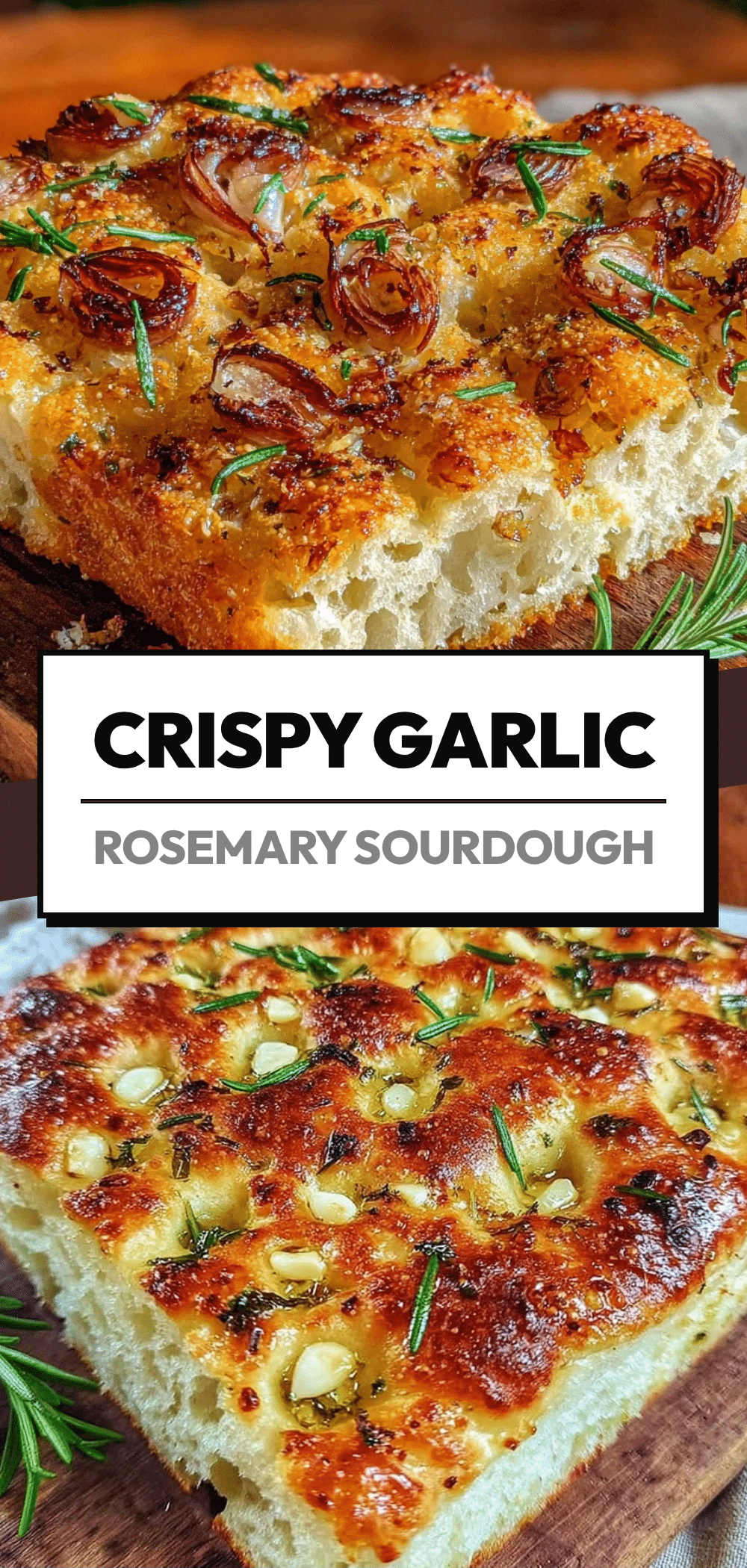

Beginner Sourdough Focaccia with Seasonal Garlic and Rosemary
- Total Time: 8-10 hours
- Yield: 12 servings 1x
Description
A forgiving, high-hydration sourdough focaccia that requires zero kneading. This recipe yields a crispy, golden crust with an airy interior, flavored with fresh rosemary and garlic.
Ingredients
- 500g (3 3/4 cups) All-Purpose Flour
- 375g (1 1/2 cups + 2 tbsp) Warm Water (75-80°F)
- 100g (2/3 cup) Active Sourdough Starter
- 10g (1 1/2 tsp) Fine Sea Salt
- 60ml (1/4 cup + 1 tbsp) Extra Virgin Olive Oil (plus more for pan and topping)
- 2 tbsp Fresh Rosemary, finely chopped
- 3 cloves Garlic, minced
Instructions
- Mix the warm water and active sourdough starter in a large bowl until dissolved. Add flour and salt, mixing until no dry flour remains. Cover and let rest for 30 minutes (autolyse).
- Wet hands and perform a stretch and fold: grab one side of the dough, stretch up, and fold over the center. Rotate and repeat four times. Cover and rest for 30 minutes. Repeat this process three more times, every 30 minutes, until the dough is smooth and elastic.
- Cover the bowl and let the dough bulk ferment at room temperature for 4-6 hours, or until it has grown 50-75% and is jiggly.
- Generously coat a 9×13 inch metal baking pan with olive oil. Pour the dough into the pan. Wet hands and gently stretch the dough to the corners. Let rest for 10 minutes.
- Press fingertips deeply into the dough to create dimples. Scatter minced garlic and chopped rosemary over the surface. Drizzle with additional olive oil. Cover loosely and let rise for 1-2 hours until puffy.
- Preheat oven to 425°F (220°C). Bake for 20-25 minutes, rotating halfway through, until deep golden brown. Let cool in the pan for 10 minutes before transferring to a wire rack.
Notes
Ensure your sourdough starter is bubbly and active (fed 4-6 hours prior) for the best rise. Do not rush the fermentation process; slow rising develops better flavor. If the top browns too quickly, tent with foil. For meal prep, the dough can be refrigerated after bulk fermentation for up to 24 hours.
- Prep Time: 10 minutes
- Cook Time: 25-30 minutes
- Category: Bread
- Cuisine: Italian
Nutrition
- Serving Size: 1 slice (approx. 1/1
- Calories: 180
- Sodium: 250
- Fat: 9
- Saturated Fat: 1
- Carbohydrates: 22
- Fiber: 1
- Protein: 4
Keywords: sourdough focaccia, beginner sourdough, garlic rosemary bread, no knead bread, artisan bread, seasonal baking


