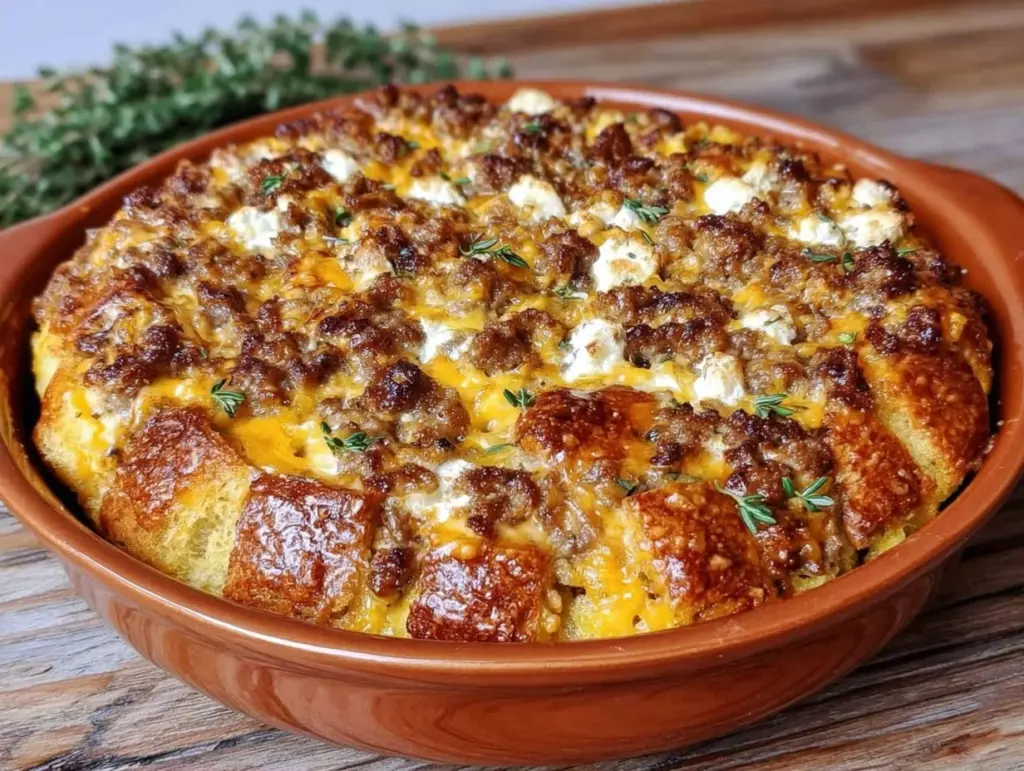
Three years ago, I stood in my pajamas at 6:30 AM on a Saturday, staring at a burnt, rubbery mess in a 9×13 pan. My kids were already awake, begging for pancakes, but I had promised them a “special breakfast.” Instead, I was serving what tasted like scrambled eggs that had been left in the oven too long. It was dry, it was salty, and it was a total disaster. My husband took one bite, politely chewed, and said, “It’s… protein.” I wanted to die.
That was the moment I realized my approach to weekend brunch was fundamentally broken. I was trying to cook everything from scratch in the morning, fighting against the clock and my own lack of caffeine. I needed a solution that was actually doable for a tired parent. I needed a Make-Ahead Breakfast Casserole that didn’t require me to be a morning person.
Over the next six months, I tested dozens of variations. I tried too much cheese, not enough cheese, cold milk, warm milk, cubed bread, torn bread. Some were soupy. Some were dry as sawdust. But then, I stumbled on the one trick that changed everything. It wasn’t about the ingredients; it was about the liquid-to-egg ratio and the resting time. Once I nailed that balance, my Make-Ahead Breakfast Casserole became the holy grail of weekend brunches. It’s creamy, it’s flavorful, and best of all, I can assemble it the night before and walk away.
If you’re tired of burnt eggs and stressful mornings, listen up. This recipe is the answer. It’s ready in about 45 minutes of active cooking time (if you don’t count the overnight chill), and it feeds a crowd without breaking a sweat. Let me show you how to make it right.
Why You’ll Love This Make-Ahead Breakfast Casserole
Real talk: most breakfast casseroles are just a vehicle for leftover bacon and stale bread. This one is different. It’s actually delicious on its own merits. Here’s why this has replaced pancakes, waffles, and even bacon in my weekly rotation:
- Zero Morning Stress — I assemble this the night before. In the morning, I just pull it from the fridge and put it in the oven. No chopping, no whisking, no panic. I can drink my coffee while it bakes.
- Perfect Texture Every Time — That one trick I mentioned? It ensures the eggs set into a custard-like consistency, not a rubbery block. The bread absorbs the custard but keeps its structure. It’s tender, not soggy.
- Feeds an Army — One 9×13 pan serves 8-10 people easily. Whether it’s a holiday brunch, a team breakfast, or just my family of four with leftovers for lunch, this scales up without extra effort.
- Freezer Friendly — I often double this recipe and freeze half. It’s the ultimate meal prep hack for busy weeks. You can bake it straight from frozen (just add 15 minutes to the cook time).
- Customizable Base — Use your favorite sausage, swap the cheese, or add veggies. It’s a blank canvas for whatever you have in your fridge. It’s similar in flexibility to smoked chorizo queso dip, where the base is simple but the mix-ins make it shine.
This is my go-to when I want to feel like a brunch hostess without actually hosting. It’s reliable, it’s comforting, and it tastes like you spent hours in the kitchen (even though you didn’t).
Key Ingredients for the Best Breakfast Casserole
You don’t need fancy, hard-to-find items for this. But there are a few specifics that matter. I’ve tested this recipe with substitutions, and some swaps work better than others. Here’s what I use and why:
Day-Old Sourdough or Challah (1 loaf, approx. 12 cups cubed) — Fresh bread is the enemy here. Fresh bread has too much moisture and will turn your casserole into mush. Day-old bread is dry and sturdy, perfect for soaking up the egg custard without falling apart. If you’re using a fluffy Japanese soufflé pancake style bread, be careful—it might be too soft. Stick to dense, crusty loaves.
Large Eggs (10 large eggs) — I use 10 large eggs for this pan. Don’t guess. Use a kitchen scale if you’re unsure. You want about 1.5 pounds of egg. Too few eggs, and it’s liquidy. Too many, and it’s dense.
Whole Milk (2 cups / 480 ml) — Do not use skim milk. The fat content is crucial for that creamy, custard-like texture. Half-and-half works too, but whole milk is the sweet spot for richness without being heavy.
Heavy Cream (1 cup / 240 ml) — This is the secret weapon. It adds richness and helps prevent the eggs from curdling or becoming rubbery. It’s the difference between a breakfast casserole and a savory flan.
Smoked Sausage (1 lb / 450 g, sliced into half-moons) — I prefer Andouille or a mild Italian sausage. Smoked sausage adds a deep, savory flavor that cuts through the richness of the eggs and cream. If you don’t like smoked flavors, use bacon or ham, but the smoke adds a lot of depth.
Sharp Cheddar Cheese (2 cups / 200 g, shredded) — Sharp cheddar has more flavor than mild, so you don’t need as much. Shred it yourself. Pre-shredded cheese has potato starch that prevents it from melting smoothly, leading to a grainy texture.
Garlic and Onion (1 medium yellow onion, diced; 4 cloves garlic, minced) — These aromatics are sautéed first. Don’t skip this step. Raw onion in a casserole tastes harsh and crunchy. Sautéing them first brings out their sweetness.
Dijon Mustard (1 tbsp) — It sounds weird in eggs, but it adds a tangy depth that balances the fat. It’s subtle, so you won’t taste “mustard,” just a better, more complex egg flavor.
Salt and Black Pepper (1 tsp kosher salt; 1 tsp freshly cracked black pepper) — Taste the egg mixture before baking. It should taste slightly too salty, because the bread will absorb some of the seasoning. Always use freshly cracked pepper.
Tools Needed
You don’t need fancy equipment. Here’s what I use, and what you can swap:
9×13 Inch Baking Dish — I use a ceramic one because it heats evenly. Glass works too, but it might brown the top faster. If your dish is smaller, you’ll need to increase the baking time.
Large Whisk — A balloon whisk is best for incorporating air and ensuring the eggs, milk, and cream are fully combined. A fork will work in a pinch, but it takes longer.
Large Skillet — For sautéing the sausage and veggies. I use a 12-inch cast iron skillet. It holds heat well and makes cleanup easy.
Measuring Cups and Spoons — Accuracy matters here, especially with the liquid ratios. Don’t eyeball the milk and cream.
How to Make It: Step-by-Step Instructions
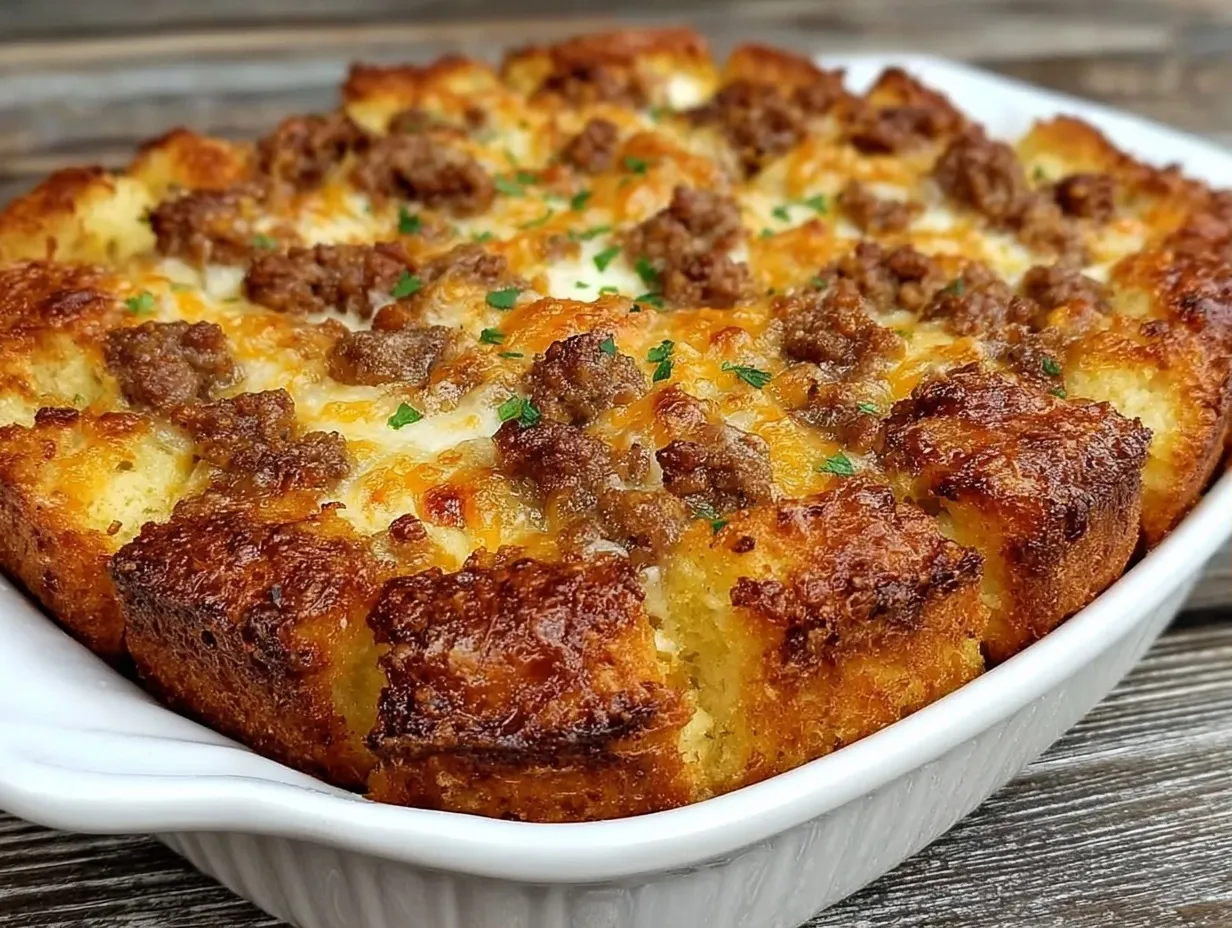
Let’s walk through the process. The key here is patience. The overnight rest is non-negotiable for that perfect texture.
Step 1: Prep the Bread (5 minutes)
Cut your day-old bread into 1-inch cubes. If your bread is fresh, spread it on a baking sheet and bake at 300°F (150°C) for 10 minutes to dry it out. Let it cool completely. Toss the cubes into your 9×13 baking dish. They should fill the dish loosely.
Step 2: Cook the Fillings (10 minutes)
Heat a large skillet over medium heat. Add the sliced sausage. Cook until browned and crispy, about 5 minutes. Remove with a slotted spoon, leaving the fat in the pan. Add the diced onion to the skillet. Cook for 3-4 minutes until translucent. Add the garlic and cook for 1 more minute. Stir in the cooked sausage. Let this mixture cool slightly.
Step 3: Make the Egg Custard (5 minutes)
In a large bowl, whisk the eggs until well beaten. Add the whole milk, heavy cream, Dijon mustard, salt, and pepper. Whisk vigorously until the mixture is uniform and slightly frothy. This step ensures there are no streaks of plain egg or plain cream.
Step 4: Assemble the Casserole (5 minutes)
Pour the egg mixture evenly over the bread cubes in the baking dish. Use a spatula to press down gently, ensuring all the bread is submerged. Sprinkle the sautéed sausage and onion mixture evenly over the top. Finally, sprinkle the shredded cheddar cheese over everything. Cover tightly with plastic wrap and refrigerate overnight (at least 4 hours, but 8-12 is ideal).
Step 5: Bake the Casserole (30-35 minutes)
Preheat your oven to 350°F (175°C). Remove the casserole from the fridge and let it sit while the oven preheats (about 15 minutes). This takes the chill off, helping it bake more evenly. Bake uncovered for 30-35 minutes. The top should be golden brown, and the center should be set (it won’t jiggle when you shake the pan). If the top browns too quickly, cover it loosely with foil for the last 10 minutes.
Total Active Time: 25 minutes. Total Time: 45 minutes (plus overnight rest). Cook Time: 30-35 minutes.
Expert Tips: The One Trick That Makes the Difference
Here’s everything I learned from making this too many times. The difference between a good casserole and a great one comes down to technique.
The Soak is Everything
The biggest mistake people make is baking the casserole immediately after mixing. The bread needs time to absorb the liquid. If you bake it right away, you get dry bread cubes floating in a pool of cooked egg. The overnight rest allows the bread to fully saturate, creating a uniform, custard-like texture throughout. I’ve learned this the hard way—my first few attempts were a mess. Now, I never skip the chill.
Don’t Overcrowd the Pan
If you’re doubling the recipe, use two pans. Overcrowding leads to uneven cooking. The edges will burn before the center is set. Spread the bread out evenly so the liquid can reach every cube.
Check for Doneness, Not Time
Ovens vary. Use the “jiggle test.” Gently shake the pan. The edges should be set, but the center should have a slight, gentle wobble, like a cheesecake. It will continue to cook from residual heat after you take it out. If it’s firm like a rubber ball, you’ve overbaked it.
Rest Before Slicing
This is the hardest part. Let the casserole rest for 10 minutes after taking it out of the oven. This allows the custard to firm up slightly, making it easier to slice into neat squares. If you cut into it immediately, it might fall apart.
Recipe Variations
Once you’ve nailed the basic version, here’s how to mix it up. This recipe is a canvas.
Ham and Swiss
Swap the sausage for diced ham and use Swiss cheese. Add some caramelized onions for sweetness. This is a classic combo that feels fancy.
Veggie Loaded
Skip the meat. Add sautéed spinach, mushrooms, and bell peppers. Use feta cheese instead of cheddar for a tangier profile. It’s lighter and great for vegetarians.
Bacon and Cheddar
If you’re a bacon lover, use crispy crumbled bacon instead of sausage. Use extra cheddar. It’s rich, salty, and comforting. Similar vibe to cheesy spinach artichoke dip but in breakfast form.
Spicy Jalapeño
Add diced jalapeños to the egg mixture and use pepper jack cheese. Top with sliced jalapeños before baking. It adds a kick that wakes you up.
Dairy-Free Option
Use coconut milk instead of heavy cream and dairy-free cheese. It’s not exactly the same, but it works in a pinch. The texture might be slightly less creamy, but the flavor holds up.
Gluten-Free
Use gluten-free bread. Make sure it’s sturdy enough to hold up to the liquid. Some gluten-free breads are too soft and will dissolve. Test a small batch first.
Serving & Storage
Serving:
Slice into 12 squares. Serve with fresh fruit salad, crispy crispy baked zucchini fries for a low-carb side, or simple arugula salad with lemon vinaigrette to cut the richness. A dollop of sour cream or hot sauce is always welcome.
Storage:
This does not freeze well once baked. The texture of the eggs changes when frozen and reheated—it becomes grainy. However, you can freeze the unbaked casserole. Assemble it in a freezer-safe dish, wrap tightly in plastic and foil, and freeze for up to 3 months. Thaw in the fridge overnight before baking.
Reheating:
Leftovers keep in the fridge for 3-4 days. Reheat individual portions in the microwave for 1-2 minutes, or warm the whole dish in a 350°F oven for 15-20 minutes until heated through.
Nutrition Information
I’m not a nutritionist, but here’s the breakdown per serving (assuming 12 servings):
| Nutrient | Amount |
|---|---|
| Calories | 380 kcal |
| Protein | 22 g |
| Carbs | 28 g |
| Fiber | 2 g |
| Fat | 18 g |
| Sodium | 650 mg |
My Take:
This is comfort food with cream, cheese, and bread. It’s not diet food. But it’s better than takeout, and I know exactly what’s in it. It’s a balanced meal with protein, carbs, and fats. Enjoy it as a special weekend treat, not a daily staple.
Final Thoughts
This Make-Ahead Breakfast Casserole has saved my mornings more times than I can count. It’s proof that you don’t need to be a morning person to host a beautiful brunch. You just need the right plan. The overnight rest is the key, so trust the process. Let the bread soak, let the flavors meld, and wake up to an amazing smell.
If you make this, drop a comment! I love hearing how it turns out in your kitchen. What variations do you try? Happy cooking!
FAQs
Can I make this the night before?
Yes! That’s the whole point. Assemble it, cover it, and refrigerate it overnight. This is actually recommended for the best texture.
Can I use fresh bread?
You can, but it’s not ideal. Fresh bread is too moist. If you must, toast the bread cubes in the oven for 10 minutes first to dry them out.
How do I know when it’s done?
The top should be golden brown, and the center should be set but have a slight jiggle. A knife inserted into the center should come out clean. Avoid overbaking, or it will become rubbery.
Can I freeze the baked casserole?
I don’t recommend it. The eggs become grainy and watery when frozen and reheated. Freeze the unbaked version instead.
Can I use milk instead of heavy cream?
You can use whole milk instead of heavy cream, but the casserole will be less rich and creamy. For the best texture, keep the heavy cream.
What kind of sausage is best?
Smoked sausage like Andouille or Kielbasa works best. It adds a smoky flavor that pairs well with eggs. Mild Italian sausage is a good alternative if you prefer less smoke.
How do I store leftovers?
Store in an airtight container in the fridge for 3-4 days. Reheat in the microwave or oven.
Pin This Recipe!


Make-Ahead Breakfast Casserole: 1 Trick for Perfect Eggs
- Total Time: 45 minutes (plus overnight rest)
- Yield: 12 servings 1x
Description
A stress-free, creamy breakfast casserole that can be assembled the night before. The key to perfect texture is the liquid-to-egg ratio and an overnight rest, resulting in a custard-like consistency rather than rubbery eggs.
Ingredients
- 1 loaf day-old sourdough or challah bread (approx. 12 cups cubed)
- 10 large eggs
- 2 cups whole milk
- 1 cup heavy cream
- 1 lb smoked sausage (Andouille or mild Italian), sliced into half-moons
- 2 cups sharp cheddar cheese, shredded
- 1 medium yellow onion, diced
- 4 cloves garlic, minced
- 1 tbsp Dijon mustard
- 1 tsp kosher salt
- 1 tsp freshly cracked black pepper
Instructions
- Preheat oven to 350°F (175°C).
- Cut day-old bread into 1-inch cubes. If using fresh bread, bake cubes at 300°F for 10 minutes to dry, then cool. Place cubes loosely in a 9×13 inch baking dish.
- Heat a large skillet over medium heat. Cook sliced sausage until browned and crispy (about 5 minutes). Remove with a slotted spoon, leaving fat in the pan.
- Add diced onion to the skillet and cook for 3-4 minutes until translucent. Add garlic and cook for 1 more minute. Stir in the cooked sausage and let cool slightly.
- In a large bowl, whisk eggs until beaten. Add milk, heavy cream, Dijon mustard, salt, and pepper. Whisk vigorously until uniform and slightly frothy.
- Pour the egg mixture evenly over the bread cubes. Press down gently with a spatula to ensure all bread is submerged.
- Sprinkle the sausage and onion mixture evenly over the top, followed by the shredded cheddar cheese.
- Cover tightly with plastic wrap and refrigerate overnight (at least 4 hours, ideally 8-12 hours).
- Remove casserole from the fridge and let it sit for 15 minutes while the oven preheats.
- Bake uncovered for 30-35 minutes until the top is golden brown and the center is set (slight jiggle is okay). If browning too fast, cover loosely with foil for the last 10 minutes.
- Let the casserole rest for 10 minutes before slicing to allow the custard to firm up.
Notes
The overnight rest is non-negotiable for the best texture, allowing the bread to fully absorb the custard. Do not use fresh bread as it is too moist; use day-old bread or toast fresh bread to dry it out. The casserole can be frozen unbaked for up to 3 months, but baked casserole does not freeze well due to texture changes. Serve with fresh fruit, arugula salad, or hot sauce.
- Prep Time: 25 minutes
- Cook Time: 30-35 minutes
- Category: Breakfast
- Cuisine: American
Nutrition
- Serving Size: 1 square
- Calories: 380
- Sugar: 3
- Sodium: 650
- Fat: 18
- Saturated Fat: 9
- Carbohydrates: 28
- Fiber: 2
- Protein: 22
Keywords: breakfast casserole, make-ahead breakfast, brunch recipe, egg casserole, sourdough casserole, holiday brunch, meal prep breakfast


